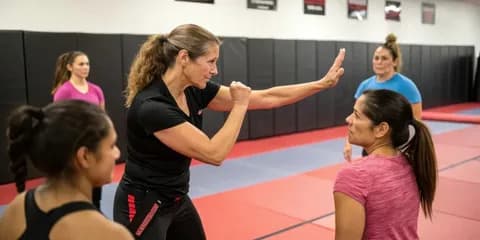
Practical Self-Defense for Women: Enhancing Corporate Safety and Confidence in 2026
Corporate safety and personal security are essential for any organization, yet many workplaces overlook the value of hands-on training. At GET SAFE, serving the Los Angeles–Long Beach–Anaheim area from our Tustin, California headquarters, we provide corporate safety training, workplace safety training, and programs in self-defense for women, along with violence prevention and de-escalation, to help teams face real-world challenges.
Our approach combines practical techniques, scenario-based exercises, and trauma-informed methods that help employees respond confidently to potential risks. By offering training that is inclusive, accessible, and tailored to each organization, our team equips individuals and teams with the skills to maintain safer workplaces, protect themselves, and contribute to stronger, more secure communities across the Los Angeles–Long Beach–Anaheim region.
A Closer Look at Corporate Safety and Risk Management
Corporate safety and risk management protect employees, maintain compliance, and create a secure work environment. For organizations across the Los Angeles–Long Beach–Anaheim area, effective safety training addresses the unique risks and operational challenges that local workplaces face.
What Corporate Safety Training Covers
Corporate safety training provides employees with the knowledge and skills to respond to workplace risks. This includes identifying hazards, learning compliance standards, and practicing general safety protocols.
We design programs that are tailored to different departments and work environments. For example:
Workplace hazards: Employees learn to identify physical risks, chemical exposures, and ergonomic issues.
Compliance standards: Training addresses OSHA alignment, state regulations, and company policies.
Safety protocols: Staff practice evacuation procedures, incident reporting, and emergency communication.
Our approach focuses on practical application, giving employees hands-on opportunities to practice safety procedures rather than just reviewing manuals. Training sessions can include role-playing scenarios, workshops, and simulated emergency drills, which help employees retain critical safety skills.
Common Challenges in Corporate Environments
Workplace violence, harassment, and emergency situations remain primary challenges for many organizations. Employees may face verbal conflicts, intrusions, or active threats that can escalate if not managed properly.
We address these risks through violence prevention and de-escalation training, teaching staff how to:
Recognize early warning signs of conflict.
Respond calmly and professionally during tense situations.
Collaborate with management or security teams to reduce risk.
For instance, in office settings, conflicts between staff or visitors can be de-escalated using communication techniques. In manufacturing environments, recognizing unsafe equipment or emergency hazards reduces incidents and injuries.
Role of Women in Strengthening Workplace Safety
Women-focused self-defense training strengthens workplace safety for all employees. Programs designed for women highlight situational awareness, boundary-setting, and physical response skills, which are applicable across the workforce.
We integrate inclusive and accessible, trauma-informed approaches to create a safe learning environment. Employees, regardless of experience or ability, can develop skills to respond safely in emergencies.
Key Benefits of Women-Focused Training in the Workplace:
Builds situational awareness and risk recognition skills for all staff.
Teaches practical self-defense techniques that can be applied across roles.
Reinforces healthy boundaries and communication strategies in high-stress situations.
Promotes a culture of confidence and shared responsibility for safety.
Offers inclusive, trauma-informed instruction that respects all participants.
Workplace Pressure & Safety Challenges Table
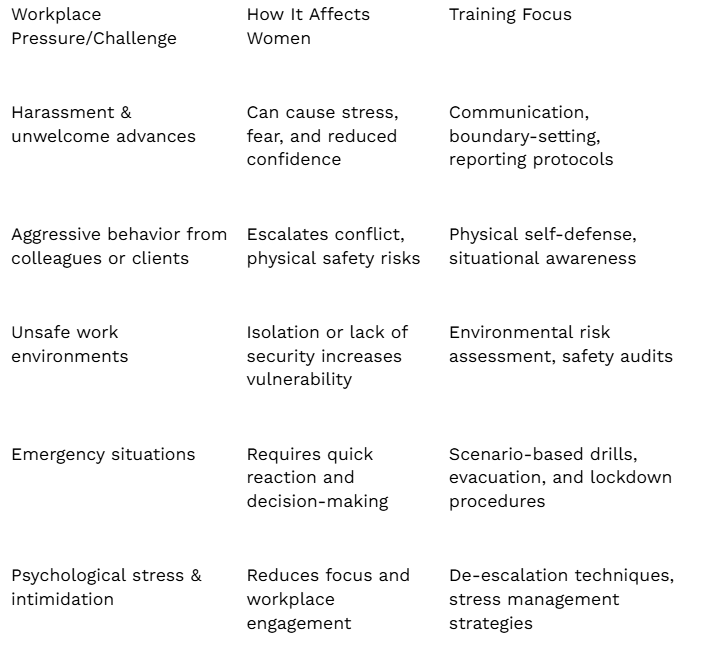
By including women-focused training in corporate safety programs, organizations create a stronger, safer workplace where all employees feel capable of responding to potential risks.
Active Shooter Prevention and Response
Active shooter prevention and response prepare employees to recognize threats and act safely. At Get Safe, we focus on teaching staff to identify early warning signs and implement practical safety measures before a situation escalates.
Recognizing Early Warning Signs
Employees trained in early threat recognition can respond to potential risks more effectively. Get Safe’s active shooter prevention training emphasizes observing both behavioral and environmental indicators.
We guide participants to:
Identify unusual behavior, such as sudden aggression, verbal threats, or signs of stress that could escalate
Spot environmental risks, including unsecured entrances, unattended packages, or access to restricted areas
Document and report concerns to supervisors or security teams promptly
For example, a sudden change in a coworker’s behavior or repeated workplace conflicts may signal a need for intervention. In a facility setting, noting unlocked access points or unsafe areas can prevent harm before it occurs.
Emergency Action Plans and Procedures
Clear, practiced emergency procedures improve response during a threat. Our corporate safety training and workplace safety training programs guide employees through step-by-step action plans.
Key steps include:
Evacuating safely using designated routes and exits
Securing workspaces when escape is not possible
Communicating with colleagues and emergency responders effectively
Following instructions from trained safety personnel or law enforcement
In the Los Angeles–Long Beach–Anaheim area, by rehearsing these procedures, employees can react calmly and decisively, reducing risks and improving safety outcomes across the workplace.
Scenario-Based Learning and Simulations
Hands-on simulations build practical skills and confidence. We create scenario-based exercises that replicate real-world situations, allowing staff to practice responses in a controlled environment.
During these sessions, participants:
Navigate mock emergency situations
Apply communication and de-escalation techniques.
Make decisions under time pressure while maintaining personal safety.
For example, an office drill may simulate a lockdown scenario, while a manufacturing site may include evacuation and shelter-in-place exercises. This approach links theory to practice and strengthens each employee’s ability to respond effectively in a real emergency.
Self-Defense for Women in the Workplace
Women in the Los Angeles–Long Beach–Anaheim area can encounter a range of safety challenges at work that impact both well-being and confidence. These challenges are not always obvious, yet they influence daily experiences and interactions.
Some common issues include:
Harassment and unwelcome advances – verbal or physical behavior that makes women feel uncomfortable or threatened.
Aggressive behavior from colleagues or clients – sudden anger or confrontations can escalate if not managed carefully.
Unsafe work environments – poorly lit areas, unlocked doors, or isolated spaces that increase vulnerability.
Emergency situations – workplace accidents, violent intrusions, or other crises where quick thinking and self-protection skills are required.
Psychological stress and intimidation – subtle pressures, exclusion, or bullying that undermine confidence and focus.
At Get Safe, our self-defense for women programs address these realities with practical techniques and situational awareness strategies. We combine physical preparedness with communication and de-escalation skills to help women respond effectively to potential threats.
Physical Preparedness and Situational Awareness
Employees develop foundational self-defense skills and safe movement strategies. Training focuses on recognizing potential threats, maintaining personal space, and applying simple defensive maneuvers.
We guide participants to:
Maintain awareness of their surroundings at all times
Use body positioning to protect themselves in confined or open spaces.
Apply basic defensive techniques like blocking, escaping holds, or creating distance.
For example, noticing a coworker or visitor behaving aggressively allows an individual to take precautionary steps before escalation. Practicing movement in real-life office layouts or public spaces helps employees react quickly if a situation becomes physical.
Communication and De-Escalation Skills
Non-physical strategies help prevent conflicts from escalating. These methods complement physical training and link directly to our violence prevention and de-escalation programs.
Participants learn to:
Use clear, calm verbal communication to defuse tension
Recognize early warning signs of confrontation.
Seek support from colleagues or supervisors when needed.
For instance, addressing a heated conversation calmly or redirecting a tense situation can prevent it from becoming physical. This approach strengthens overall workplace safety and reduces risk across teams.
Building Confidence Through Training
Structured programs build confidence and situational awareness. By practicing realistic scenarios, employees develop the skills and mindset needed to act decisively during unexpected events.
We focus on empowering individuals and communities by:
Creating a safe environment to practice techniques
Encouraging participation regardless of prior experience
Reinforcing personal agency and readiness in daily work environments
As women gain confidence through training, they contribute to a stronger, safer workplace culture that benefits everyone on the team.
Integrating Safety Training Across the Organization
Safety training works best when it reaches every department and role within an organization. We focus on designing programs that fit the unique needs of your team while creating a culture where safety becomes part of daily routines.
Customizing Programs for Corporate Needs
Training should reflect the specific challenges of each department. Our corporate and workplace safety training programs adapt to the environments your employees work in.
For example:
Administrative teams practice emergency communication and office evacuation procedures.
Customer service staff learn de-escalation techniques for tense interactions.
Operations and manufacturing employees focus on physical safety, hazard recognition, and equipment protocols.
By tailoring content to each group, employees gain practical skills that are relevant to their day-to-day responsibilities, helping them act effectively if a situation arises.
Including Everyone in Safety Planning
A safe workplace involves participation from all employees. We design programs that are inclusive and accessible, covering every gender, role, and department.
We work with leadership to:
Identify areas of risk across teams
Integrate self-defense, communication, and de-escalation training.
Reinforce collaboration and shared responsibility for safety.
This approach contributes to building safer environments for all, ensuring every employee feels capable and involved in maintaining a secure workplace.
Continuous Learning and Reinforcement
Safety skills improve with regular practice. We provide ongoing refresher courses, drills, and scenario-based reviews to help employees maintain sharpness and confidence.
Key elements include:
Scheduled training refreshers for teams
Realistic scenario exercises to simulate potential emergencies
Feedback sessions to address gaps and reinforce key techniques
By delivering tailored, practical safety training, we help organizations create long-term habits that reduce risk, strengthen workplace culture, and support employees in staying alert and prepared.
Benefits of Detailed Safety Training
Safety training provides clear advantages for employees, organizations, and the wider community. By integrating structured programs, we create environments where individuals feel prepared, teams work more cohesively, and communities experience greater security.
For Individuals
Training helps employees gain confidence and awareness in daily routines. Self-defense for women and violence prevention and de-escalation sessions teach practical strategies to respond to potential threats, improving personal security and readiness.
Participants benefit from:
Techniques to protect themselves in high-risk scenarios
Methods to recognize and avoid potential conflicts
Skills to maintain composure and communicate effectively under stress
For example, women in a corporate office can apply situational awareness techniques during off-hours or crowded spaces, while de-escalation training equips staff to handle tense interactions without confrontation.
For Organizations
Organizations gain stronger teams and reduced risks. Corporate safety training and workplace safety training help employees respond to hazards, maintain compliance, and contribute to a safer culture.
Key benefits include:
Reduced incidents of workplace violence or safety breaches
Improved employee morale and confidence
Enhanced productivity by minimizing disruptions
Alignment with regulatory and safety standards
For instance, a company with well-trained staff can handle emergencies more efficiently, reducing downtime and fostering trust across departments.
For the Community
Safe workplaces ripple into safer communities. By providing employees with knowledge and skills to protect themselves and others, we contribute to broader safety outcomes.
Our programs focus on empowering individuals and communities by:
Encouraging proactive behavior in everyday environments
Reducing risks beyond the workplace through education
Building networks of informed and responsible participants
Ultimately, comprehensive safety training strengthens employees, organizations, and the surrounding community, creating a more secure environment for everyone.
What You Can Expect After Training
After completing our self-defense programs in Los Angeles, Long Beach, and Anaheim, participants gain practical skills and confidence that extend beyond the classroom. Key outcomes include:
Heightened Awareness – Recognize potential threats quickly and respond effectively.
Improved Physical Preparedness – Apply basic self-defense techniques and safe movement strategies.
Stronger Communication Skills – De-escalate tense situations with calm, clear verbal techniques.
Increased Confidence – Feel empowered to handle workplace challenges and emergencies.
Enhanced Team Safety – Contribute to a culture where everyone shares responsibility for workplace security.
These results help employees not only protect themselves but also reinforce a safer, more proactive workplace environment across the Los Angeles–Long Beach–Anaheim area.
Why Get Safe Leads in Corporate Safety Training
At Get Safe, we provide corporate safety training, self-defense programs for women, and violence prevention and de-escalation strategies that address real-world workplace challenges. With over 40 years of experience, our programs combine practical techniques, trauma-informed methods, and regulatory compliance to create meaningful learning for every participant.
We tailor training to your organization, aligning content with specific compliance requirements, workplace risks, and team roles.
Key highlights include:
Customized Programs: Adapted for different departments, industries, and job roles.
Flexible Delivery: Options for in-person or online sessions to suit schedules and locations.
Inclusive Learning: Exercises designed for diverse abilities, ensuring all employees can participate fully.
Practical Skills: Hands-on strategies for early risk recognition, effective communication, and both physical and non-physical self-defense.
Trained Instructors: Trainers with law enforcement, military, behavioral health, and corporate safety backgrounds provide real-world insights.
Clients see tangible results. Carmen Bishop from Walt Disney Imagineering shared:
“Thank you for providing us with such a great, useful program. This boosted our employees’ safety awareness.”
By combining tailored programs, experienced instructors, and a recovery-informed,OSHA-aligned approach, we create learning experiences that strengthen workplace safety, build team confidence, and foster a culture where employees feel prepared and supported.
Getting Started with Get Safe
Step 1 – Submit Your Training Request
Begin by reaching out to our team. We will learn about your organization, team size, and unique safety needs to plan the right training approach.
Step 2 – Training Designed for Your Organization
We tailor our safety program to match your workplace environment, goals, and team dynamics, making sure the training is practical and relevant.
Step 3 – Strengthen Workplace Safety
Providing employees with safety skills helps them feel secure and perform confidently. A prepared team can respond effectively to risks while maintaining focus on daily responsibilities.
Take Action to Strengthen Safety Today
At Get Safe, we provide tailored corporate safety training, self-defense programs for women, and violence prevention and de-escalation strategies for organizations across the Los Angeles–Long Beach–Anaheim area.
Designed to enhance women’s safety, this training also strengthens overall workplace safety and confidence for every employee.
Connect with our team by emailing [email protected] or calling (714) 834-0050 to discuss training options and schedule sessions that fit your workplace, school, or community needs.
Empowering Individuals with IDD Through Self-Advocacy and Personal Safety Classes in California
At GET SAFE, we help individuals with intellectual and developmental disabilities (IDD) build the confidence and skills to stay safe, advocate for themselves, and navigate everyday challenges. Our personal safety classes in California are tailored to meet each participant’s needs, teaching them how to recognize risks, set boundaries, and respond to difficult situations with confidence.
In the Los Angeles–Long Beach–Anaheim area, we partner with schools, families, caregivers, and service providers to bring practical safety strategies, violence prevention training, and bullying prevention programs directly to students and communities. By emphasizing clear communication, hands-on practice, and self-advocacy, our approach equips individuals with IDD and the schools that support them to create safer, more inclusive environments where everyone can thrive.
Recognizing the Safety Challenges for Individuals with IDD
Individuals with intellectual and developmental disabilities (IDD) face real safety challenges during everyday activities. We see these risks across schools, community programs, and independent living settings in California.
Daily Risks and Vulnerabilities
Individuals with IDD experience higher exposure to safety risks during routine interactions. These risks often appear in places meant to feel familiar and supportive.
Common concerns include:
Physical safety: Difficulty noticing unsafe environments, strangers, or escalating situations
Online safety: Exposure to scams, manipulation, and inappropriate contact through social platforms
Bullying: Repeated targeting at school, work programs, or community spaces
Elopement or wandering: Leaving safe spaces without supervision, increasing risk of accidents or getting lost.
Exploitation can occur when someone misuses trust, authority, or access. This includes financial pressure, emotional manipulation, or unsafe relationships. Without clear safety education, these situations may go unnoticed or unreported.
At Get Safe, we work with service providers in the Los Angeles–Long Beach–Anaheim area who see these patterns affect independence and long-term well-being.
Why Safety and Self-Advocacy Skills Matter
Safety and self-advocacy skills support independence and daily decision-making. When individuals can name discomfort, set boundaries, and ask for help, risk exposure decreases.
These skills support:
Clear communication during stressful moments
Safer choices in social and community settings
Stronger responses during emergencies
Emergency preparation also matters. Knowing how to contact trusted adults, describe a problem, or respond to unexpected events supports better outcomes.
We design personal safety classes in California that focus on practical responses, repetition, and trauma-informed safety education.
When you support individuals with IDD, training should reflect their real experiences. That approach strengthens confidence, supports independence, and builds safer environments across schools, programs, and communities.
By developing safety and self-advocacy skills, individuals are better prepared to apply what they learn in real-life situations. These abilities create a foundation for structured training, like Personal Safety 101, where practical tools and everyday strategies are practiced and reinforced.
Personal Safety 101
We designed Personal Safety 101 to give adults with IDD practical tools they can use every day. The goal is to help participants notice potential dangers, respond confidently, and stay safe in familiar and new environments.
What Participants Learn:
Situational awareness: Spot unusual behavior, unsafe environments, and social cues.
Boundary setting: Communicate personal limits clearly with friends, family, or strangers.
Recognizing threats: Identify risky situations before they escalate.
Conflict response: Learn ways to stay calm and react safely.
Safety habits: Develop routines that protect them in daily life.
How We Practice:
Role-playing exercises to rehearse responses to conflicts or emergencies.
Guided discussions to identify trusted adults, safe spaces, and community support.
Personal Safety & Self-Advocacy Training
This program builds on foundational skills and helps participants speak up for themselves while staying safe. We focus on giving them confidence to act respectfully and assertively in everyday situations.
What Participants Learn:
Conflict avoidance: Prevent situations from becoming unsafe.
Communication skills: Ask for help, express needs, and set limits clearly.
Community safety: Recognize safe spaces, people, and routines outside the home.
Self-advocacy: Stand up for personal rights and preferences.
Decision-making: Make thoughtful choices in challenging situations.
How We Practice:
Scenario-based exercises simulating common community situations.
Group discussions to practice assertive communication and respectful refusal.
Healthy Relationships & Safe Sexuality Training
We focus on helping participants build safe and respectful relationships. This program emphasizes consent, personal boundaries, and positive social interaction.
What Participants Learn:
Boundaries: Understand personal space, privacy, and comfort levels.
Consent and respect: Recognize and practice mutual agreement.
Personal safety: Protect themselves from manipulation or abuse.
Self-advocacy in relationships: Express needs and limits confidently.
Social skills: Build friendships, communicate effectively, and handle conflicts safely.
How We Practice:
Role-playing scenarios involving peer pressure or unsafe requests.
Group exercises on consent and refusal
Program Summary Table
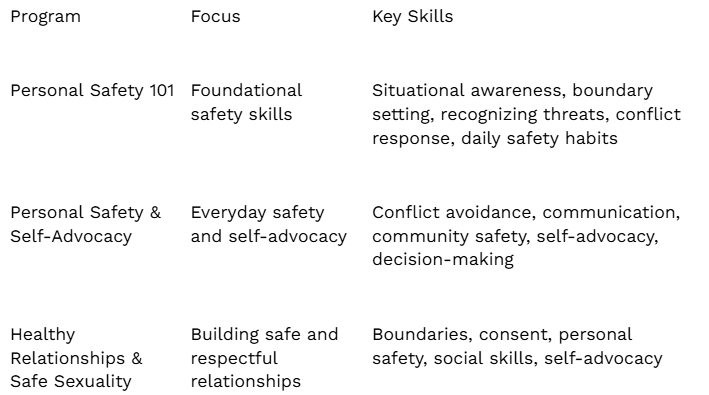
Get Safe delivers these programs across the Los Angeles–Long Beach–Anaheim area, helping individuals with IDD gain confidence, practical skills, and self-advocacy through expert-led, trauma-informed safety education.
Trauma-Informed Safety Education
At Get Safe, we know that learning about safety can feel overwhelming, especially for individuals who may have faced difficult experiences in the past.
Our trauma-informed approach creates a space where participants feel respected, supported, and understood. By focusing on empathy and patience, we help people not only practice safety skills but also recover from challenging incidents and move forward with confidence.
Participants learn to set boundaries, recognize risks, and speak up in ways that feel safe and empowering.
What Trauma-Informed Means
Being trauma-informed means we adapt our training to the needs of each participant:
Respectful interaction – treating participants with dignity and listening to their experiences.
Inclusive learning – making sure materials and activities are accessible for different abilities and learning styles.
Supportive environment – offering encouragement and guidance instead of judgment, so participants feel comfortable asking questions.
This approach helps participants engage more fully, retain what they learn, and apply safety practices in everyday life.
Techniques and Strategies
We focus on methods that build real confidence and practical skills:
Communication skills – learning to express needs clearly, assert boundaries, and request help when needed.
De-escalation techniques – managing conflict calmly, reducing tension, and preventing situations from escalating.
Confidence-building exercises – practicing responses through role-playing and scenario-based activities that mirror real-life challenges.
By combining these strategies with a trauma-informed mindset, we help participants in the Los Angeles–Long Beach–Anaheim area develop both the skills and the confidence to stay safe in their communities.
School Safety and Bullying Prevention Programs
We focus on helping schools create safer environments where students feel supported and confident. All students can face bullying or unsafe situations, but students with IDD may experience these challenges more frequently or intensely.
Our programs guide educators, parents, and administrators in recognizing risks, responding effectively, and fostering leadership skills in young people.
Recognizing and Responding to Bullying
Bullying can take many forms, from verbal teasing to online harassment. We teach practical ways to identify early warning signs and respond appropriately:
Spotting changes in behavior, mood, or social interactions.
Knowing patterns of exclusion, teasing, or repeated aggression.
Using clear and consistent intervention strategies to stop harmful behaviors.
By addressing issues early, schools can prevent escalation and help students feel heard and valued.
Role of Educators and Parents
Educators and parents play a key part in building safety:
Model positive behavior – showing respect, patience, and empathy in daily interactions.
Collaborate with students – involving them in discussions about safety rules and expectations.
Maintain open communication – checking in regularly with students about their experiences.
Working together creates a consistent message that safety and respect are priorities both in school and at home.
Building Leadership and Confidence in Students
Students gain more than protection; they develop skills that last a lifetime:
Advocacy – learning to speak up for themselves and others.
Self-expression – practicing clear communication and assertiveness.
Decision-making – exploring safe ways to navigate conflicts or peer pressure.
Our bullying prevention programs for schools give students hands-on experience in using these skills, helping them take control of situations with confidence.
Other Safety Programs: Character Academy & PALS
Get Safe also offers additional programs like Character Academy and PALS, designed to strengthen personal responsibility, social skills, and peer support.
These school safety programs complement safety and self-advocacy training by helping students practice positive behaviors, teamwork, and conflict resolution in safe, structured settings.
Character Academy: Builds leadership, respect, and ethical decision-making among students.
PALS (Peer Assistance & Leadership Skills): Encourages peer mentoring, teamwork, and communication to foster supportive school communities.
These programs work alongside our core safety and bullying prevention training, giving schools in the Los Angeles–Long Beach–Anaheim area a more complete approach to building safer, inclusive, and confident student populations.
After all, children are the future, and investing in their safety and self-advocacy skills today shapes the leaders of tomorrow.
Violence Prevention Training for Individuals and Caregivers
We provide practical training that helps individuals and caregivers recognize risks, take action, and feel more confident in daily interactions. Our goal is to give people tools they can apply in real-life situations without fear or confusion.
Strategies to Reduce Risk
Our violence prevention training focuses on simple, everyday strategies that make a difference in personal safety:
Awareness of surroundings – noticing unusual behavior or unsafe environments early.
Setting personal boundaries – learning how to communicate limits clearly and respectfully.
Safe routines – identifying safer routes, trusted contacts, and reliable ways to reach help.
These habits create a stronger sense of control and allow individuals to respond calmly to potential dangers.
Developing Preparedness
We move beyond theory by guiding participants through scenario-based exercises that simulate real situations:
Role-playing encounters – practicing responses to verbal threats, bullying, or unexpected emergencies.
Decision-making drills – exploring options and consequences in a safe, controlled setting.
Resource access – knowing whom to contact and how to reach assistance quickly.
By practicing these scenarios, participants gain confidence in responding to real-life events, whether at home, in the community, or at school. Caregivers also learn ways to support the people they assist, helping reduce incidents and create a safer environment for everyone involved.
Tailored Training for Different Audiences
We don’t believe in one-size-fits-all. Whether you’re an individual, caregiver, school, service provider, or law enforcement agency, Get Safe customizes its curriculum to match your needs, keeping lessons practical, engaging, and impactful for all participants.
Adults with IDD
Our training helps adults with intellectual and developmental disabilities build confidence and everyday safety skills:
Personal safety practices: Recognize risks and respond calmly.
Healthy relationship guidance: Learn consent, boundaries, and respectful communication.
Self-advocacy development: Speak up clearly and assert personal needs.
Parents and Caregivers
We equip families to reinforce safety at home and in the community:
Model safe behaviors and respectful responses.
Guide supervision without overprotection.
Encourage skill use in daily routines.
Agencies and Service Providers
Organizations receive training designed for practical implementation and staff readiness:
Meet safety and wellness regulations.
Equip staff with actionable strategies.
Integrate lessons into daily operations for lasting impact.
By tailoring our programs, we help all individuals, participants, families, and staff build safer, more confident, and empowered communities.
Benefits of Safety Training
Participating in safety training provides clear advantages for individuals, families, and organizations. It helps people feel more capable in daily life, reduces risks, and strengthens relationships within the community.
Increased Confidence and Independence
Speak up clearly about needs and personal boundaries.
Make safe choices in everyday situations.
Respond calmly to unexpected challenges.
Build independence and self-reliance in daily routines.
Reduced Incidents of Unsafe Encounters
Recognize early warning signs of bullying and respond effectively.
Identify whom to trust and how to ask for help.
Be aware of potential hazards at home, school, or in the community.
Practice real-life safety skills to act quickly and appropriately.
Stronger Community Trust
Share observations and concerns openly with caregivers, staff, and peers.
Reinforce safety skills consistently across home, school, and community environments.
Encourage everyone to participate in creating a secure space.
Promote inclusion, support, and collaboration for safer communities.
At Get Safe, we are dedicated to providing tailored, practical safety training that helps individuals with IDD, families, and organizations build safer, more confident, and connected communities.
What Sets Get Safe Apart
Real-World, Trauma-Informed Safety Training: We deliver practical, scenario-based safety training grounded in real-world experience from law enforcement challenges to community situations. Our trauma-informed approach makes content accessible, respectful, and effective for all learners, including individuals with disabilities, youth, and frontline professionals.
Customized Programs for Every Audience: We don’t believe in one-size-fits-all. Whether you’re a school, service provider, corporation, or law enforcement agency, our team tailors curriculum to your unique needs, ensuring lessons are relevant, engaging, and lead to measurable results.
Over 40 Years of Trust & Impact: With four decades of proven service, ours is a trusted leader in prevention education. We’ve partnered with thousands of organizations across California and beyond, training participants with the confidence, skills, and tools to stay safe, de-escalate conflict, and advocate for themselves and others.
Tailored Training for Your Industry: No generic solutions here. Every program is designed to align with your compliance requirements and workplace-specific risks, helping staff apply safety strategies in real-world environments.
Trained Instructors with Real-World Experience: Our trainers bring experience from law enforcement, military, behavioral health, and corporate safety. They combine professional expertise with hands-on knowledge to make each session practical and actionable.
OSHA-Compliant & Recovery-Informed Approach: Your team receives training that meets regulatory standards while fostering a culture of trust, safety, and confidence, supporting individuals and organizations to respond effectively to challenges.
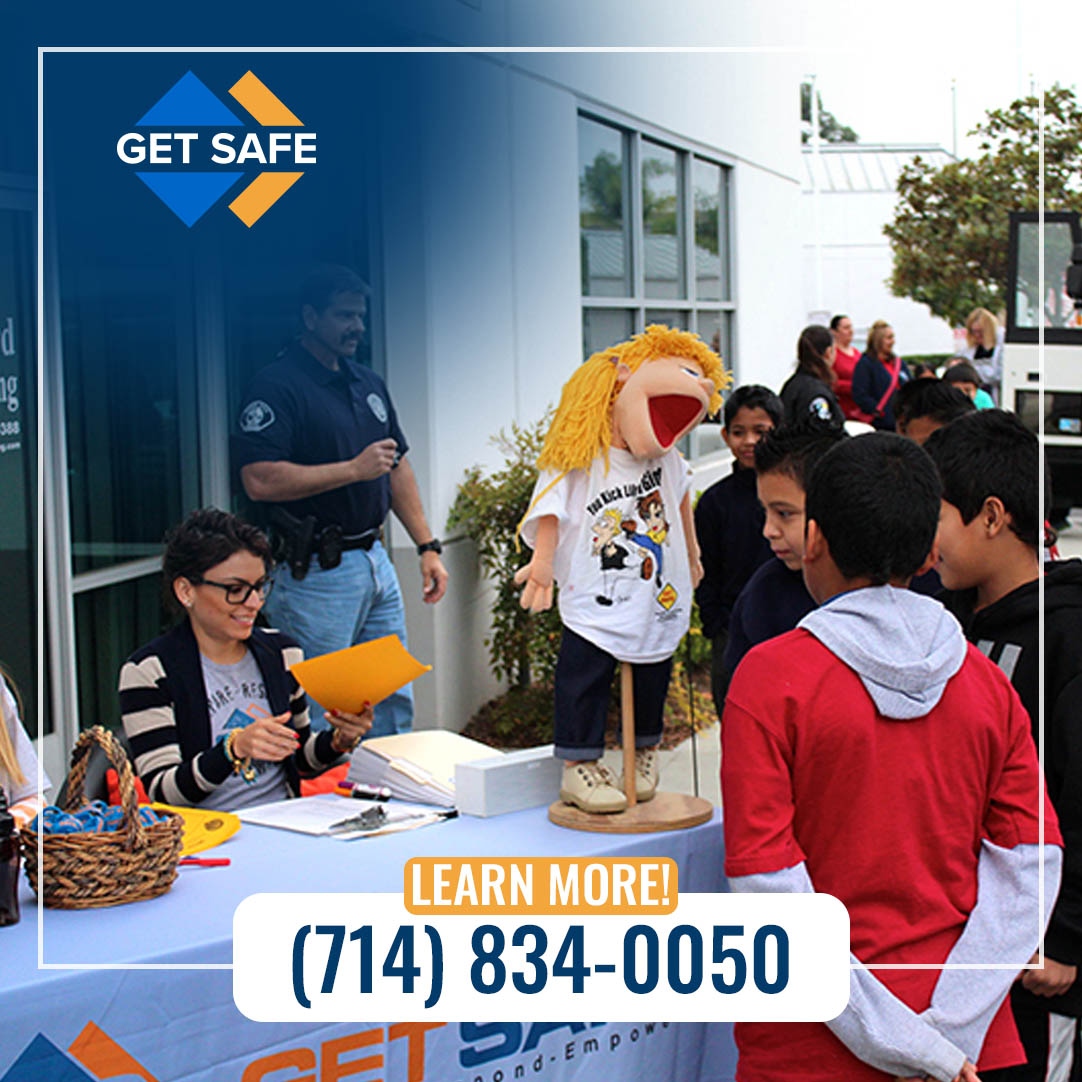
Client Testimonial: "Before Get Safe, I didn’t always think about how I talked to people — I could be bossy without realizing it. During group training, I learned how to treat acquaintances, friends, family, and even strangers with more respect. I especially liked using the puppets, and Jessie was my favorite! They helped me feel more comfortable when we talked about things like going to the doctor or learning about anatomy. I also learned it’s not okay to bully people, even if I’m upset. The 4 Ps stuck with me, and now I try to be more aware of how I act. It was fun and helpful at the same time." - John, Momentum Group Training
Stories like John’s show how our programs empower participants to build confidence, practice respect, and apply safety skills in everyday life.
Take the Next Step Toward Safer Communities
At Get Safe, we help individuals, schools, and organizations in Los Angeles, Long Beach, and Anaheim build confidence and skills through personal safety classes in California, violence prevention training, school safety programs, and bullying prevention programs for schools. Our trauma-informed safety education ensures every session is respectful, engaging, and practical.
Reach out today to schedule a training or ask questions—email us at [email protected] or call (714) 834-0050. We tailor every program to your unique needs because we know one size doesn’t fit all.