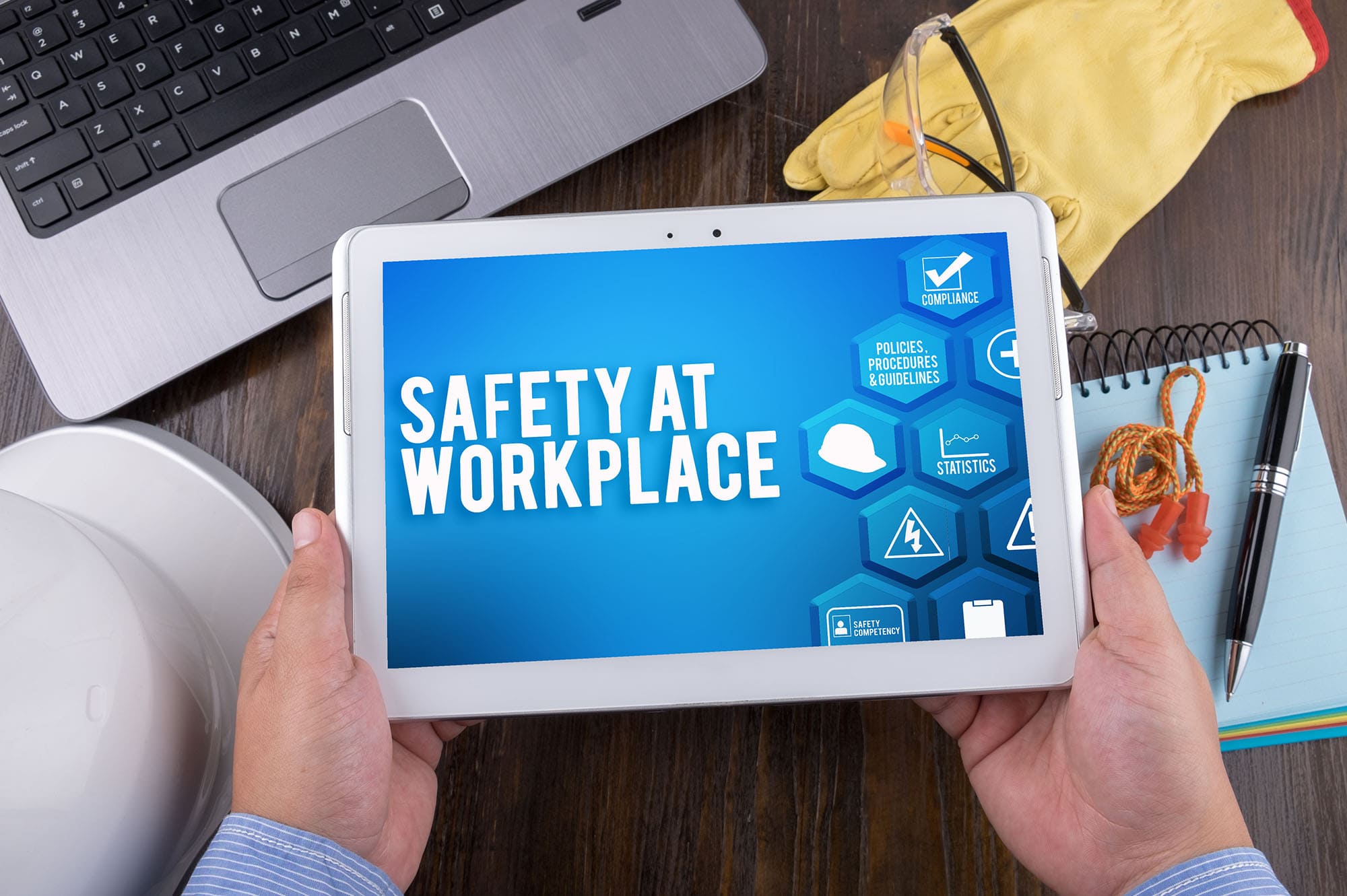
How Workplace Safety Training Reduces Risk and Builds Stronger Teams in Los Angeles
Organizations across the Los Angeles, Long Beach, and Anaheim metropolitan area are placing a stronger focus on building teams that respond well to workplace risks. Workplace safety training supports employees in recognizing hazards, following procedures, and responding through clear communication. At Get Safe, we deliver corporate safety, active shooter preparedness, and violence prevention and de-escalation programs designed around real workplace conditions.
Resilient teams are built through training, observation, and structured response. We help your workforce identify risks early, act with clarity, and coordinate effectively during incidents. This approach supports safer operations, stronger team coordination, and consistent application of safety practices across daily work environments.
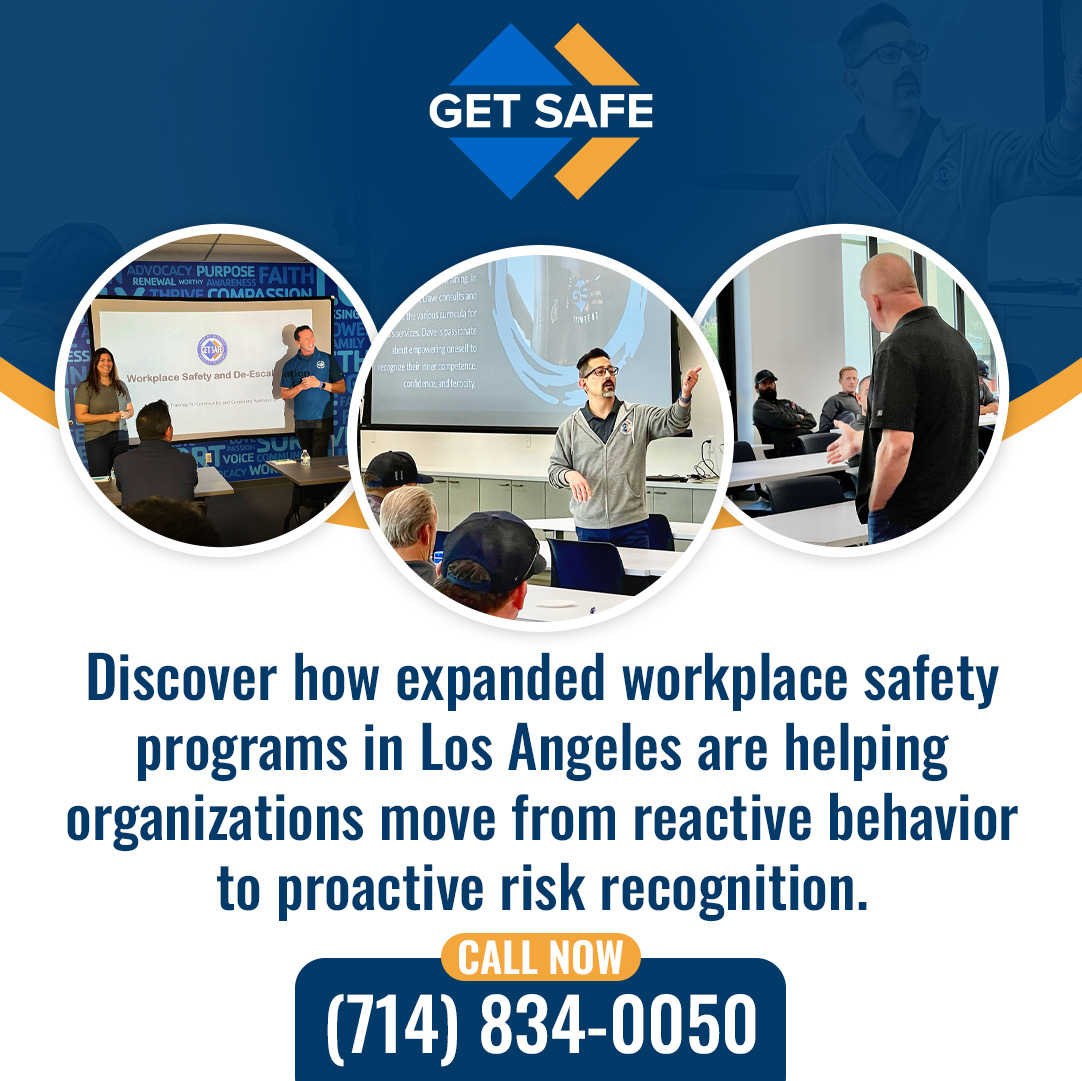
What Are Resilient Teams in the Workplace?
We build resilient teams by preparing employees to respond to challenges through structured training and clear communication.
Resilient teams maintain stability during disruptions and respond using trained actions instead of guesswork.
These teams rely on workplace safety training to handle both daily risks and high-pressure situations. They follow defined procedures, communicate clearly, and act without delay.
Resilience is not based on experience alone. It is developed through consistent training and practical application.
Key Characteristics of Resilient Teams
Resilient teams demonstrate clear communication, awareness, and a structured response during incidents.
We develop these traits through safety training programs.
Key characteristics include:
Clear and direct communication during emergencies
Awareness of potential risks and warning signs
Defined roles and responsibilities
Calm response based on training
For example:
Employees follow assigned roles during an evacuation
Teams apply de-escalation methods in tense situations
Why Resilience Matters in Today’s Work Environments
Resilience helps teams manage risk, maintain operations, and meet safety requirements.
Work environments face both internal and external risks. Without training, responses may be delayed or inconsistent.
Resilience supports:
Creating safer workplaces through trained response
Reduced disruptions during incidents
Internal alignment with Cal/OSHA general industry safety practices and the employer's own workplace violence prevention program
At Get Safe, we build this through our tailored training supported by practical, real-world scenarios.
Benefits of Building Resilient Teams
We focus on outcomes that improve safety, stability, and day-to-day performance across your organization.
Resilient teams help reduce risk, maintain operations during disruptions, and respond with trained actions.
With structured workplace and corporate safety training, teams act with clarity during incidents. This reduces delays, limits confusion, and supports consistent responses across departments.
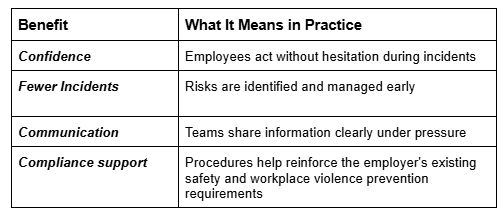
These outcomes come from repeated training and exposure to real-world scenarios.
Improved Employee Confidence and Decision-Making
Employees build confidence by learning how to observe and interpret surrounding cues before taking action.
We train employees to notice:
Changes in behavior or tone
Unusual activity in the workplace
Signs of stress, tension, or escalation
This improves decision-making because actions are based on what they observe, not assumptions.
Reduced Workplace Incidents and Disruptions
Early observation allows teams to act before situations escalate into incidents.
Through violence prevention and de-escalation training, employees identify:
Escalating behavior during interactions
Environmental risks such as unsafe layouts or blocked exits
Warning signs that may lead to conflict
Acting on these observations reduces disruptions and prevents repeat incidents.
Stronger Communication and Team Coordination
Teams coordinate better when they share observations clearly and in real time.
We train teams to:
Report observed risks immediately
Communicate changes in situations
Align actions based on shared awareness
This creates a coordinated response across departments.
Supports Your Compliance and Risk Management Program
Observation skills help teams identify and report risks in line with your organization's existing safety and workplace violence prevention procedures.
Through safety training, employees:
Document observed hazards
Follow your established reporting protocols
Apply response procedures based on real situations This reinforces your organization's broader compliance and workplace safety efforts.
This strengthens both compliance and workplace safety.
The Role of Workplace Safety Training in Building Resilience
Workplace safety training builds resilience by developing situational awareness, structured response, and coordinated communication.
We build resilience by training your team to observe risks, follow defined actions, and communicate clearly during incidents.
Through our training, your employees learn how to recognize surrounding cues, assess conditions, and act based on trained procedures. This includes both routine risks and high-pressure situations.
Key training outcomes include:
Identifying early warning signs in behavior or environment
Following step-by-step response protocols
Communicating observations across teams
Acting without delay during incidents
Resilience develops through repetition and real-world application, not theory alone.
How Workplace Training Prepares Employees for Real Situations
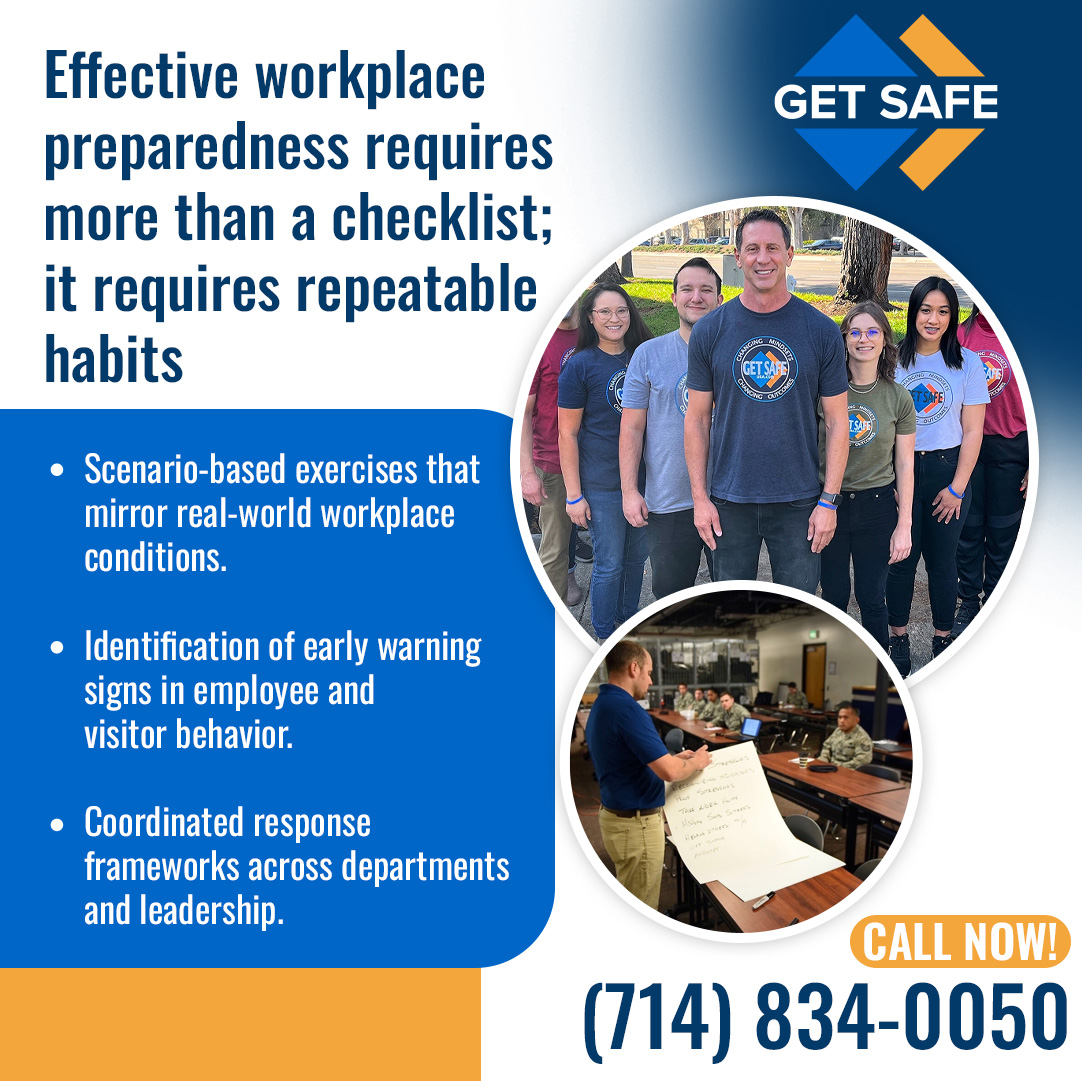
Training helps employees practice how to observe, interpret, and respond to workplace situations through scenario-based exercises.
We design training sessions in the Los Angeles–Long Beach–Anaheim metropolitan area that reflect actual workplace conditions. Employees practice how to respond to situations they may face during daily operations.
This includes:
Observing changes in behavior, tone, or movement
Identifying environmental risks, such as blocked exits or unsafe areas
Responding to conflict using de-escalation techniques
Examples:
A team member notices rising tension and applies de-escalation steps
Staff respond to a simulated emergency using trained procedures
Employees report risks based on what they observe in real time
This approach builds familiarity with real situations.
Moving Beyond Basic Compliance to Practical Readiness
Practical readiness means employees apply safety procedures through observation and action, not just policy awareness.
Many programs stop at meeting baseline requirements. We build on that foundation by training employees to act based on real conditions, so your team is both compliant and operationally prepared.
Through corporate training, your team:
Practices response actions in controlled scenarios
Learns how to observe and report risks accurately
Follows structured procedures during incidents
This method helps reinforce familiarity with workplace response procedures.
Corporate Safety Training as a Strategic Investment
We approach safety training as a business decision that affects risk, performance, and team stability.
Corporate safety training may help organizations strengthen workplace preparedness, communication practices, and risk awareness.
With structured training, you prepare your teams to observe risks, follow procedures, and respond in a coordinated way. This applies across departments, from leadership to frontline staff.
This investment supports:
Reduced operational disruptions
Clear response protocols across teams
Better coordination during incidents
Stronger workplace structure through training
Training can support broader business continuity and operational preparedness efforts.
Supporting Business Leaders and Safety Officers
Safety training gives leaders structured systems to manage risk, guide teams, and maintain control during incidents.
We support business leaders and safety officers by providing training that aligns with workplace conditions. This provides leaders with structured procedures and communication frameworks during workplace situations.
Key areas of support include:
Defining roles and responsibilities during incidents
Establishing reporting and communication protocols
Training teams to observe and report risks
This creates a structured approach to workplace safety management.
Aligning Safety Training with Organizational Goals
Safety training supports business goals by integrating risk management into daily operations.
We align our training with your operational needs, workforce structure, and compliance requirements. This keeps safety connected to how your organization functions.
This includes:
Matching training to workplace risks and environments
Integrating safety procedures into daily workflows
Supporting your organization's compliance efforts under California Labor Code § 6401.9 (SB 553) and Cal/OSHA general industry standards
This alignment supports both safety and operational consistency.
Long-Term Impact on Productivity and Workplace Culture
Safety training can improve productivity by helping reduce disruptions and creating a structured work environment.
We see long-term impact when teams apply training consistently. Employees spend less time reacting to incidents and more time maintaining workflow.
Key outcomes include:
Fewer disruptions caused by safety incidents
Faster response to workplace risks
Stable work environment with clear expectations
Over time, this builds a workplace culture where safety practices are part of daily operations, not separate tasks.
Preparing for Critical Situations with Active Shooter Preparedness Training
We prepare your team to recognize threats early and respond with structured actions during high-risk situations.
Active shooter prevention training focuses on situational awareness, early threat recognition, and coordinated response planning.
Through this training, your employees learn how to observe surroundings, identify unusual behavior, and act using defined procedures. The focus is on preparation through repeated practice.
Key areas covered include:
Understanding potential threats in workplace settings
Employees learn to identify warning signs such as unusual movement, restricted area access, or sudden behavioral changes.
Early awareness and risk recognition
Teams are trained to observe surrounding cues, including rising tension, unattended items, or protocol violations, and report them through proper channels.
Response planning and team coordination
Employees follow structured procedures such as lockdowns or evacuations, while communicating in real time and acting based on assigned roles.
This approach builds readiness across the organization in the Los Angeles, Long Beach, and Anaheim metropolitan area and supports a coordinated response during critical situations.
Strengthening Teams Through Violence Prevention and De-Escalation
We strengthen your teams by training them to recognize early signs of conflict and respond with controlled communication.
Violence prevention and de-escalation training reduces workplace conflict by improving observation, communication, and response behavior.
Through this training, your employees learn how to read situations, manage interactions, and act before conflicts escalate. This supports both safety and daily operations.
Key areas covered include:
Identifying early signs of conflict
Employees learn to observe changes such as raised voices, tense body language, or withdrawal. These cues often appear before a situation escalates.
Communication techniques that reduce escalation
We train your team to use calm tone, clear language, and controlled responses. This helps lower tension during difficult interactions.
Practical applications in daily workplace interactions
Employees apply these skills in routine situations such as customer service, team discussions, and high-stress environments.
Examples in practice:
A staff member recognizes agitation and adjusts communication style
A team member de-escalates a tense conversation with a client
Employees report concerning behavior before it develops further
This approach builds consistency across teams and supports safer workplace interactions through trained observation and response.
Real-World Safety Training for Different Audiences
We design training based on the specific risks, environments, and responsibilities of each group.
Real-world safety training adapts to different audiences by focusing on their daily challenges, roles, and risk exposure.
Your teams do not face the same situations across industries. We tailor our training and corporate safety training so each audience receives relevant, practical instruction.
Key training applications include:
Corporate and organizational training programs
We train employees and leadership teams to manage workplace risks, follow safety procedures, and respond during incidents. This includes active shooter prevention and internal communication protocols.
Training for service providers supporting individuals with IDD (Intellectual and Developmental Disabilities)
IDD refers to conditions that affect learning, communication, and behavior. We train providers to observe behavioral cues, apply violence prevention, and support safe interactions.
Supplemental training for law enforcement and first responder personnel
We offer scenario-based sessions focused on communication, observation, and de-escalation that complement the agency-required, POST-certified training officers receive through their departments. This supports safer interactions with the public.
Programs for educators and community environments
We train school staff and community teams to recognize risks, manage group settings, and respond to safety concerns involving students and the public.
This approach allows your organization to apply safety training in a way that fits real working conditions.
Supporting Personal Safety Awareness in the Workplace
We include personal safety as a supporting element within broader workplace training.
Personal safety awareness supports workplace training by helping individuals recognize risks without shifting focus from organizational safety.
Our approach keeps the emphasis on team-based response while introducing individual awareness where relevant.
Key points include:
Where self-defense for women fits within safety training
Self-defense for women is one component of our broader safety training. It covers awareness, boundary setting, recognizing unsafe situations, and practical personal safety strategies appropriate to the training environment.
Building individual awareness without shifting focus from organizational safety
Employees learn to observe surroundings, identify risks, and report concerns. These actions support team safety rather than individual response.
This approach keeps personal safety aligned with workplace procedures and team coordination.
Why Organizations Choose Get Safe
We work with organizations that need practical training aligned with real workplace conditions.
Organizations choose Get Safe for experience, tailored training, and instruction based on real-world practice.
Our approach focuses on how your teams operate daily. We build training around your environment, risks, and responsibilities.
What sets our training approach apart:
Experience across industries
We have worked with corporations, service providers, law enforcement, and educators. This allows us to apply training methods across different work environments.
Customized and practical training programs
We design programs based on your workplace structure and risk profile. Get Safe is not a one-size-fits-all safety training provider. Each program is shaped around your operational needs, team roles, and day-to-day challenges.
Real-world instruction backed by professional expertise
Our instructor team includes former law enforcement officers, military veterans, and professionals with experience in behavioral health and crisis intervention. Training reflects real situations, not theory-based sessions.
Focus on observation and response.
We train your teams to recognize surrounding cues, report risks, and act using defined procedures.
Organizations that work with us apply safety practices consistently across teams and daily operations.
Client Testimonial: “Awesome Training!!! Awesome Instructors!!! Awesome Program!!! In today's world, being able & knowing how to protect yourself & defend your loved ones is a must, this is hands down the best training for all members of the family.”–Shawn D.
Real-World Application of Safety Awareness
We see how training carries into everyday decision-making inside the workplace. One example comes from a client whose front-desk staff member noticed a visitor becoming increasingly agitated while waiting in the lobby. Her initial impulse was to wait and see if the situation resolved on its own.
Through Get Safe training, we help employees focus on behavioral cues, tone shifts, and environmental factors during uncertain interactions. She paused, recognized escalation indicators, and discreetly signaled a colleague while applying de-escalation language she had practiced in training.
Instead of allowing the situation to develop further, the team followed their trained protocol and resolved the interaction calmly before it required outside intervention.
This choice reflects a key training principle. Safety decisions improve when attention is placed on surroundings and behavioral cues, not just the task at hand. Small details such as tone, posture, and timing can influence safer outcomes.
Take the Next Step Toward a Safer Workplace
We help you build teams that are prepared, aware, and ready to act.
Get in touch with Get Safe to schedule your workplace safety training in the Los Angeles, Long Beach, and Anaheim metropolitan area to strengthen your organization’s readiness.
Reach out to us at [email protected] or call (714) 834-0050 to discuss your training needs and request a session tailored to your team.