How to Teach Teens Online Safety: A Practical Guide for Parents and Educators in California
Online interactions can influence how teens communicate with peers, respond to social situations, and manage relationships across school and home environments. We at Get Safe, Tustin, California, work with schools, parents, and educators to guide structured safety education that reflects real challenges teens face on social media, messaging apps, and gaming platforms.
We support families and schools across Los Angeles–Long Beach–Anaheim with practical programs that connect classroom learning and home discussions. Our focus stays on building awareness around online behavior, communication habits, and safer decision-making so teens receive steady guidance across both school and daily life.
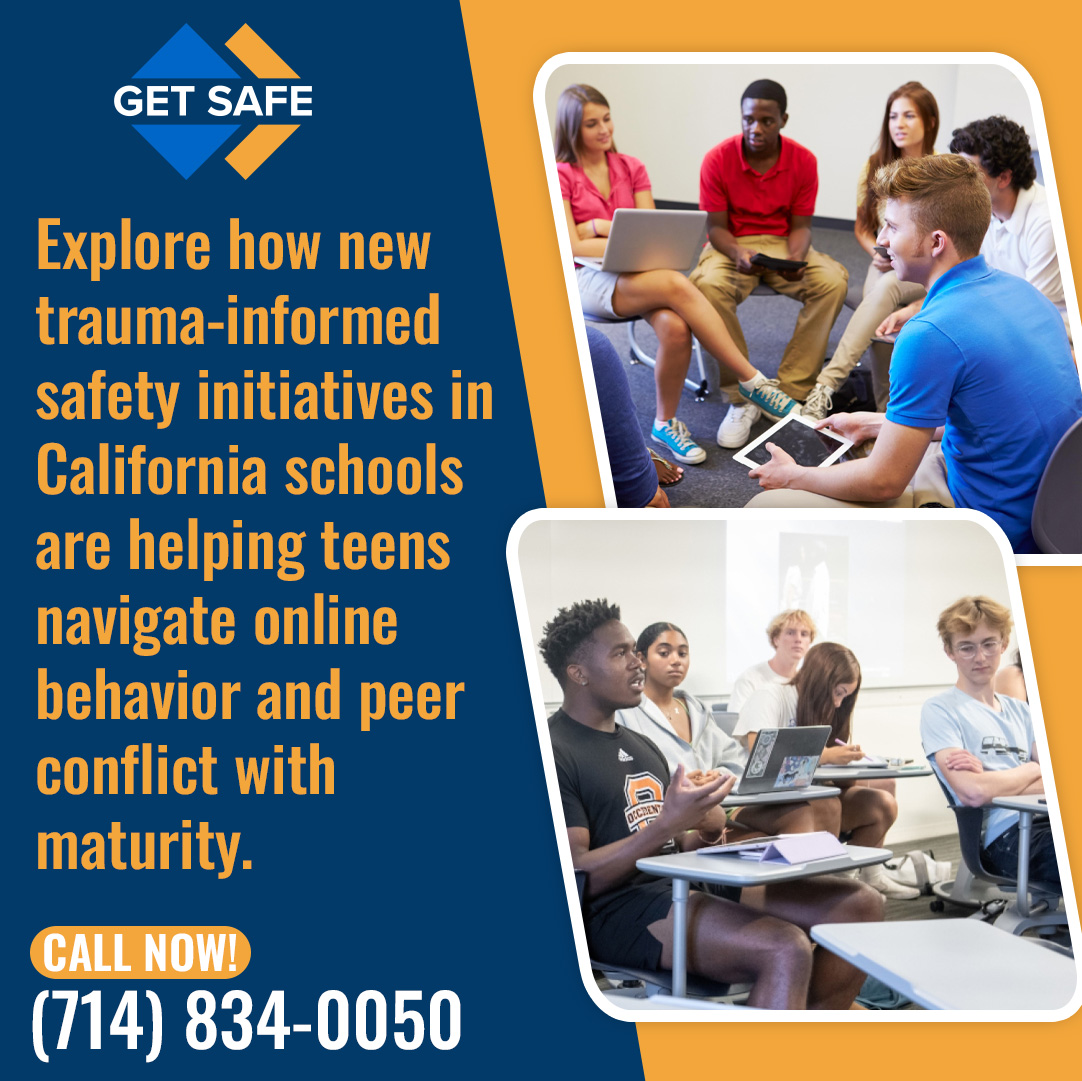
Introduction to Teen Online Safety Education
Teen online safety education sits at the core of how families and schools support responsible digital behavior.
We work with parents and educators across Los Angeles–Long Beach–Anaheim to address real situations teens face on social media, messaging apps, and gaming platforms.
Our approach connects everyday digital activity with clear guidance that fits into school routines and home conversations.
Why online safety education matters for teens
Online safety education helps teens handle digital interactions with awareness and responsibility. Teens spend many hours online, and their communication patterns, friendships, and learning experiences are shaped through these spaces.
Without guidance, teens may not fully recognize how online posts, messages, or shared content can affect privacy, reputation, or peer relationships over time. Families and schools play a shared role in fostering steady conversations that support safer digital choices.
Key points:
Teens use social media and messaging apps throughout the day
Online posts and messages may remain visible for extended periods
Digital communication influences school behavior and peer relationships
Early guidance supports safer long-term online habits
Parents and educators benefit from simple routines that fit into daily life without adding complexity or pressure.
Common digital risks faced by teenagers
Teen online activity often brings risks that appear during normal use of apps and platforms. Early awareness helps adults respond with clarity and guidance.
Social media exposure and oversharing
Personal details such as location, routines, or photos may be shared without full awareness of who can access them. Shared content can spread beyond intended groups.
Online harassment and bullying behavior
Harmful messages may appear in comments, group chats, or gaming spaces. This may affect classroom participation, peer interaction, and student well-being.
Contact with unknown individuals
Some users may build trust over time while hiding their identity. Teens may not always notice early warning signs in these interactions.
Misleading content and manipulation tactics
Edited media, false claims, and persuasive messaging can influence opinions and decisions. These situations often blend into regular content feeds without clear indicators.
We at Get Safe continue working with families and educators to support safer online habits through practical guidance and consistent communication.
Role of parents and educators in guiding safe online habits
We work with parents and educators to support consistent guidance that shapes responsible online behavior in teens. Shared communication helps create clear expectations across home and school.
Parents observe daily device use at home, while educators see behavior in classroom settings. Both perspectives help identify concerns early.
Support methods include:
Regular discussions about online activity
Clear device and app boundaries
Shared awareness of online risks
Coordinated responses to concerns
We encourage ongoing communication so teens receive steady and aligned guidance across environments.
Online Safety Challenges Affecting Teenagers
We work with parents and educators who observe how online activity shapes teen behavior across home and school environments. Teens deal with social pressure, privacy risks, and communication challenges during everyday platform use.
Social media behavior and peer influence
Social media often shapes how teens present themselves and respond to peer expectations. These platforms influence identity, attention, and daily communication habits.
Pressure to maintain online presence
Teens stay active to remain visible among peers
Frequent posting becomes part of the daily routine
Online feedback often guides posting behavior
Impact of likes and comments
Likes and comments shape self-image
Mood may shift based on engagement levels
Content choices often depend on peer response
Cyberbullying and online harassment
Cyberbullying refers to repeated harmful behavior across digital platforms. This behavior often continues outside school hours and affects daily routines.
Common forms across platforms
Messaging apps with repeated harmful texts
Social media comment sections with public targeting
Group chats with exclusion or coordinated behavior
Gaming platforms with in-game harassment
Effects seen in school settings
Reduced participation in classroom activities
Withdrawal from peer groups
Attendance changes
Difficulty focusing on school tasks
Online privacy risks
Families often notice how quickly personal data spreads online. Teens may share information without full awareness of long-term visibility.
Key risk areas:
Sharing names, photos, or school details publicly
Posting daily routines or location updates
Weak passwords or reused login details
Shared devices left logged into accounts
Contact with unknown individuals
Interactions with people outside a teen’s known circle may begin casually and shift into private exchanges over time.
Common risk patterns:
Moving conversations from public to private spaces
Requests for personal details or contact information
Encouraging secrecy from parents or friends
Gradual trust-building without verified identity
Our team supports schools and families through structured safety education, violence prevention training,school safety programs, bullying prevention programs for schools, and trauma-informed approaches designed around real challenges teens face online.
Risks When Online Safety Education Is Not Addressed
We work with parents and educators who often notice changes in teen behavior when online risks are not addressed early. These situations usually grow through daily use of social media, messaging apps, and gaming platforms, where patterns repeat without correction or support.
Common risks we observe include:
Teens interacting with unknown individuals without recognizing early warning signs
Gradual sharing of personal details during casual online conversations
Repeated exposure to cyberbullying across multiple platforms
Emotional stress affecting school participation and home behavior
Oversharing of personal data, such as location, photos, or routines
Online conflicts continuing into the classroom and peer environments
Reduced confidence in handling unsafe or uncomfortable digital situations
Impact Overview and Support from Get Safe
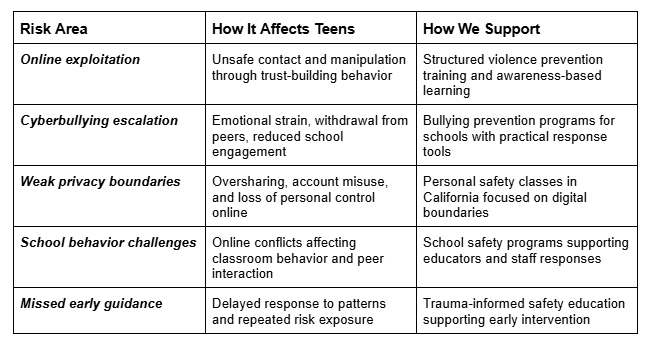
We continue working with families and schools to connect these patterns with practical learning through tailored programs, supporting safer digital behavior across everyday environments.
School-Based Online Safety Programs
We work with schools that want structured online safety education aligned with student behavior and classroom needs. Our programs support educators in building consistent guidance around digital conduct, peer interaction, and responsible online communication.
Role of structured education in schools
We see structured education as a way to connect online behavior with daily school life. Students respond better when expectations around digital activity are clear, repeated, and supported by staff across grade levels.
Key elements of structured school programs include:
Consistent messaging on digital behavior across subjects
Regular reinforcement through classroom discussions
Clear alignment between school policies and student actions
Practical examples drawn from real student online activity
We work with educators to integrate safety topics into existing schedules without disrupting academic priorities. This helps students relate lessons to real online situations they face outside school.
Bullying prevention programs for schools
Online interactions often shape how bullying starts and spreads in school settings. Messages, posts, and group chats can carry conflict from digital spaces into classrooms and peer groups, affecting student relationships and behavior.
Our bullying prevention programs address both online and offline behavior patterns. Schools often see these two areas overlap, especially through messaging apps, social platforms, and classroom interactions.
Addressing online and offline bullying behavior
We support schools in identifying how digital conflict can move into school environments and affect peer relationships.
Common focus areas include:
Monitoring patterns of repeated harmful communication
Addressing conflicts that begin on social media and continue at school
Supporting staff in responding to student reports of bullying
Encouraging early reporting of harmful behavior
Building respectful communication habits among students
We work with students to strengthen how they communicate across digital and in-person settings.
This includes:
Using respectful language in messages and group chats
Recognizing how online words affect peers
Setting boundaries in group communication
Encouraging positive peer interaction in school settings
Through our school safety programs, we support educators in building safer learning environments where communication and behavior standards remain consistent across settings.
Violence Prevention Training and Digital Behavior
Online communication can lead to unsafe or violent situations in school and community settings when conflicts are not managed early. Messages shared through social platforms and group chats often move from digital spaces into real-world interactions.
We at Get Safe connect digital behavior patterns with violence prevention training to support safer decision-making in student communication.
Connection between online behavior and real-world conflict
Online interactions often influence how students behave in person. Small digital disagreements can grow into larger school conflicts when not addressed early.
Common online patterns linked to conflict include:
Repeated negative messaging or targeting in chats
Public arguments in comment sections
Sharing content meant to provoke reactions
Group-based exclusion or online pressure
These behaviors can spread across peer groups and affect classroom relationships and school environments.
De-escalation strategies for students and educators
We focus on practical steps that help reduce tension during online disagreements and prevent escalation into physical or emotional conflict.
Key strategies include:
Pausing before responding to heated messages
Moving conversations away from group platforms
Involving trusted adults early in conflict situations
Setting clear boundaries for online communication
Using neutral language during disagreements
Avoiding public callouts or group pressure
Focusing on facts instead of assumptions
Stepping away from conversations when needed
We support schools through effective training that connects digital behavior with real-world outcomes, helping students build safer communication habits across online and school environments.
Personal Safety Classes in California for Teens
We work with schools and families to support teens with practical safety learning. The focus stays on real situations teens face in school, online platforms, and community settings.
Focus areas of youth safety education:
Digital awareness and responsible communication that connects online posts, messages, and comments with school and home relationships
Boundary setting in online interactions through control of personal information, contact requests, and group participation
Decision-making in unfamiliar situations involving pressure-based messages, unknown contacts, and unclear digital interactions
Local relevance for California schools and families:
Classroom-based personal safety sessions for structured learning in school settings
Youth programs focused on digital communication habits across social platforms.
Parent engagement workshops on teen online behavior and safety awareness
School-led activities that support safer peer interaction and communication
Our personal safety classes in California support teens in building clearer communication habits, stronger boundaries, and safer decision-making across school and digital environments.
Trauma-Informed Safety Education Approach
A trauma-informed approach is used to support how teens respond to safety education. The focus stays on practical learning while considering emotional responses linked to online and offline experiences.
Supporting emotional well-being while teaching safety:
Recognition of stress reactions linked to online interactions and peer pressure
Support for calm communication during sensitive safety discussions
Space for varied learning pace across student groups
Connection between behavior patterns and emotional triggers
Creating supportive learning environments:
Open discussion around online challenges faced by teens
Clear and non-threatening language during sessions
Structured sharing of experiences in group settings
Respectful communication between peers during activities
Our trauma-informed safety education supports schools and families in guiding teens through online safety topics with attention to both behavior and emotional response.
Practical Online Safety Guidance for Teens
We support teens, parents, and educators with practical online safety guidance that fits into everyday digital use. The focus stays on helping teens handle social media, messaging apps, and school platforms with clearer awareness and steady responsibility.
Online behavior is connected to real situations teens face across communication, sharing, and peer interaction.
Key guidance areas:
Safe social media habits through privacy settings, account control, and mindful posting practices
Communication safety by identifying unsafe messages, pressure-based requests, and unknown contacts
Digital responsibility that links online actions with school behavior, relationships, and peer trust
Respectful communication across chats, comments, and direct messages
Awareness of long-term visibility of posts, shares, and online activity
Our team works with schools and families to support consistent online safety habits that teens can apply in daily digital communication.
How Get Safe Supports Online Safety Education
We work with schools, families, and educators to support practical online safety education that reflects real teen behavior across digital platforms.
Our approach focuses on structured learning, consistent communication, and real-world application.
Key areas we focus on include:
Interactive safety sessions built around real teen online scenarios
School programs that align classroom learning with digital behavior guidance
Educator training that supports response to online conflict and student conduct
Parent-focused guidance for discussions on social media and messaging habits
Practical examples drawn from social media, gaming, and group communication platforms
We design each program to support steady coordination between schools and families so teens receive consistent direction across environments. This helps reduce gaps between what is taught at school and what is practiced at home.
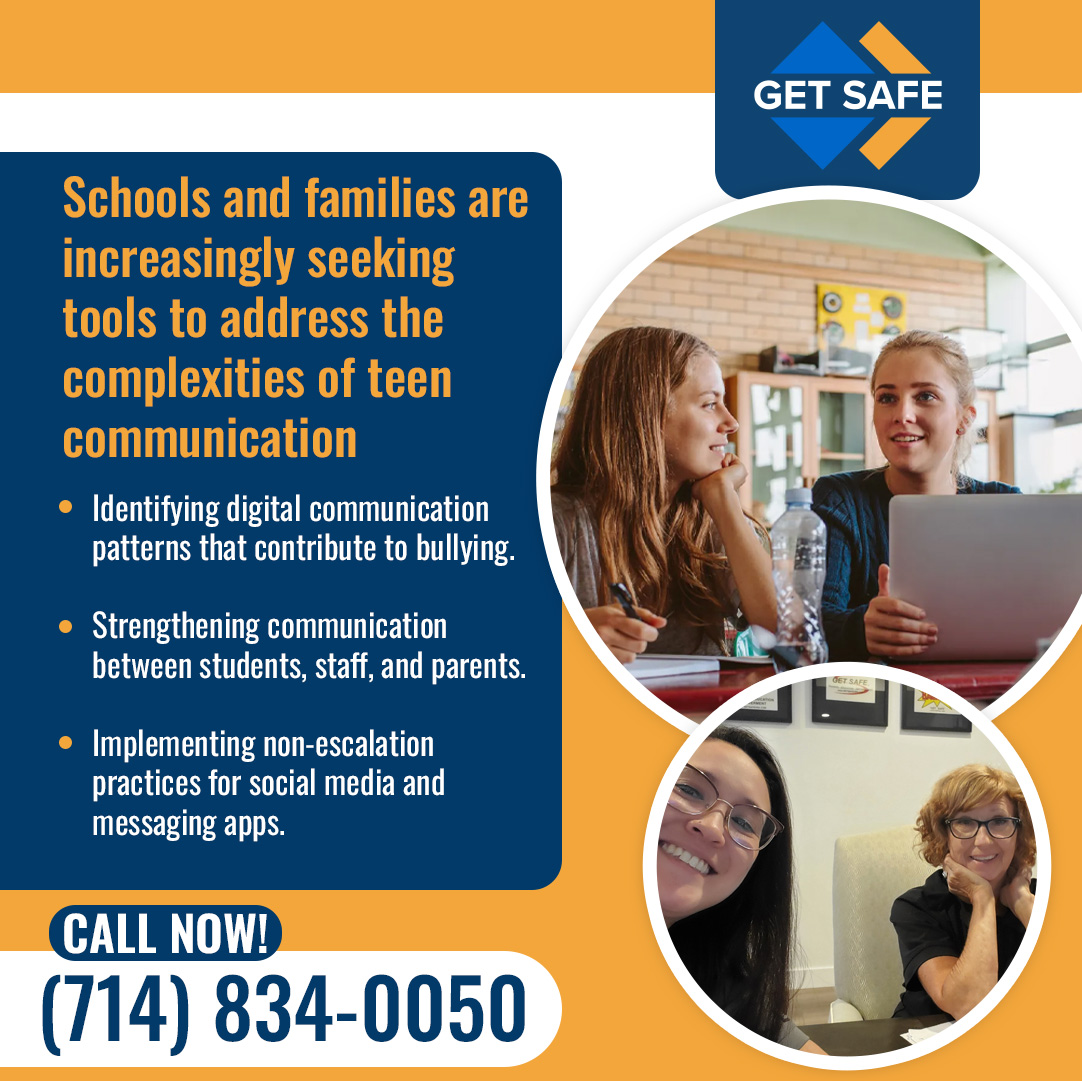
Connect with Get Safe for Online Safety Education Support
We at Get Safe support schools, parents, and educators with online safety education,bullying prevention programs for schools, and trauma-informed safety education across Los Angeles, Long Beach, and Anaheim.
If you are planning personal safety classes in California or want to strengthen student safety practices, we are available to support your needs through structured training.
Contact us at [email protected] or (714) 834-0050 for program details and scheduling.