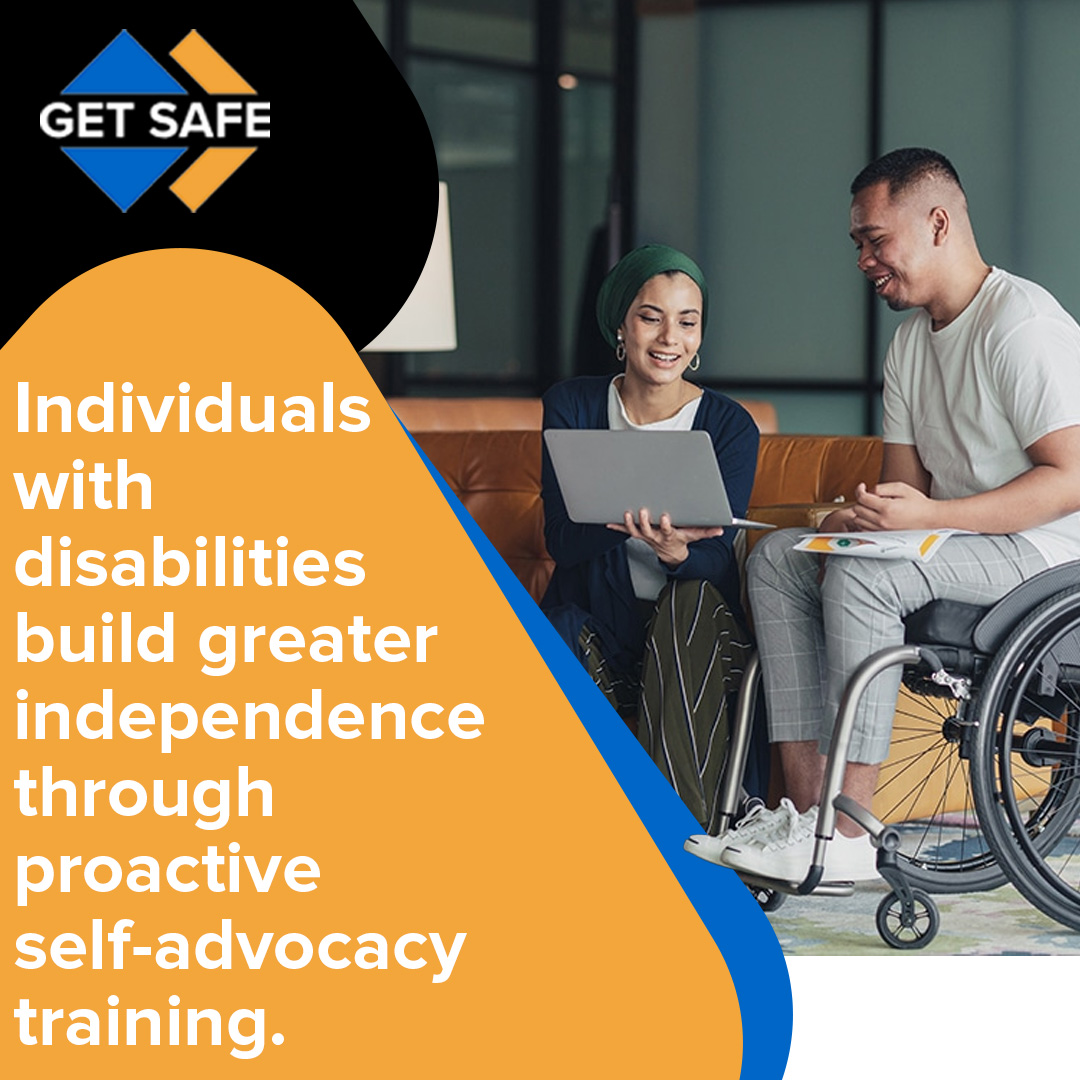
From School to Adulthood: How Individuals with Disabilities Build Lifelong Safety Skills
Building independence involves more than learning daily routines. For individuals with disabilities, it also means developing the skills to recognize unsafe situations, communicate needs, and make confident decisions in everyday life.
At Get Safe USA, safety education starts early by helping students recognize concerns, communicate their needs, and build confidence. As individuals grow, these skills continue to develop through practical training designed for real-life situations.

How Do School Safety Programs Build the Foundation for Independence?
Independence begins long before adulthood.For many children with disabilities, school is where they first learn to recognize unsafe situations, speak up, and ask for help.
Effective school safety programs help students build confidence by teaching them to:
Recognize bullying, peer pressure, and unsafe situations.
Report concerns to trusted adults without fear of blame.
Understand personal boundaries and communicate them clearly.
Practice decision-making skills in everyday situations.
These skills are especially important because bullying can have lasting effects on mental health, physical well-being, and academic success. According to the CDC, bullying prevention and early intervention play an important role in creating safer environments for young people.
Our bullying prevention programs for schools help reinforce these skills by giving students the tools to recognize risks, set boundaries, seek support, and build confidence in everyday situations.
What Challenges Do Adults with Disabilities Face When Seeking Independence?
The challenges do not disappear after graduation. Many adults with intellectual and developmental disabilities want more control over daily decisions but run into the same core issues, now with higher stakes:
Difficulty recognizing manipulation or unsafe situations before they escalate
Trouble setting boundaries with caregivers, peers, or strangers
Limited chances to practice decision-making without direct supervision
Higher risk of financial exploitation, fraud, or abuse tied to communication barriers
Research also shows that individualized self-management training can help individuals with intellectual disabilities achieve personal goals, strengthen decision-making skills, and increase independence.
How Does Self-Advocacy Training Address These Challenges?
Self-advocacy training gives people a structured way to practice the skills that independence actually requires, picking up where school safety programs left off. Rather than simply warning someone about danger, it teaches:
How to identify warning signs in a conversation or situation
Scripted, practiced ways to say no or ask for help
Role-play scenarios that mirror real situations, from transportation to online interactions
When and how to report something that feels unsafe
We build our personal safety classes in California around this kind of repeated practice, since a single conversation rarely changes behavior on its own. Our violence prevention training empowers individuals with practical skills to identify unsafe situations, advocate for themselves, and navigate daily interactions more safely.
What Does Personal Safety Training Look Like for Adults with Disabilities?
Our personal safety classes in Los Angeles, Long Beach, Anaheim, and across California for this population give participants time to absorb material and practice out loud.

Trauma-informed safety education matters here because many participants have already experienced a boundary violation. Training that ignores this reality tends to feel abstract; training built around lived experience tends to stick.
How Do Caregivers Know Independence Training Is Working?
Progress is often seen in everyday moments, such as participants:
Asking questions before agreeing to something.
Recognizing and speaking up when a situation feels unsafe.
Requesting help or setting boundaries with greater confidence.
These small, consistent changes show that the skills are becoming part of daily life.
FAQ
How does violence prevention training fit into self-advocacy education?
It adds a wider set of skills for recognizing and responding to risk in group settings and online spaces.
Does this training replace supervision entirely?
No, it reduces reliance on supervision over time rather than removing support altogether.
Can this training happen in a group home, school, or only in independent living settings?
All three. Because one size doesn't fit all, we customize each program to match the needs, abilities, and learning style of every group.

Helping Individuals Build Skills for Everyday Safety
Independence grows one practiced skill at a time. At Get Safe, we partner with families and service providers in Los Angeles, Long Beach, and Anaheim to deliver trauma-informed safety education that gives individuals with disabilities the tools to live independently.
Call us at (714) 834-0050 or email [email protected] to learn more or schedule a program.