From Awareness to Action with Get Safe: Preventing Violence in Schools and Communities
knowledge, OSHA-alignedCreating safer schools and communities in Los Angeles, Long Beach, and Anaheim requires practical strategies and education that address real risks. At Get Safe, we deliver evidence‑based personal safety and violence prevention training tailored to students, staff, and community members, focused on awareness, actionable response skills, and confidence‑building.
Our programs go beyond traditional lessons by offering trauma-informed safety education, bullying prevention programs for schools, and hands-on safety training for individuals with intellectual and developmental disabilities (IDD). We focus on teaching actionable skills that protect children and adults, reduce incidents of unsafe behavior, and support stronger, safer communities throughout the region.
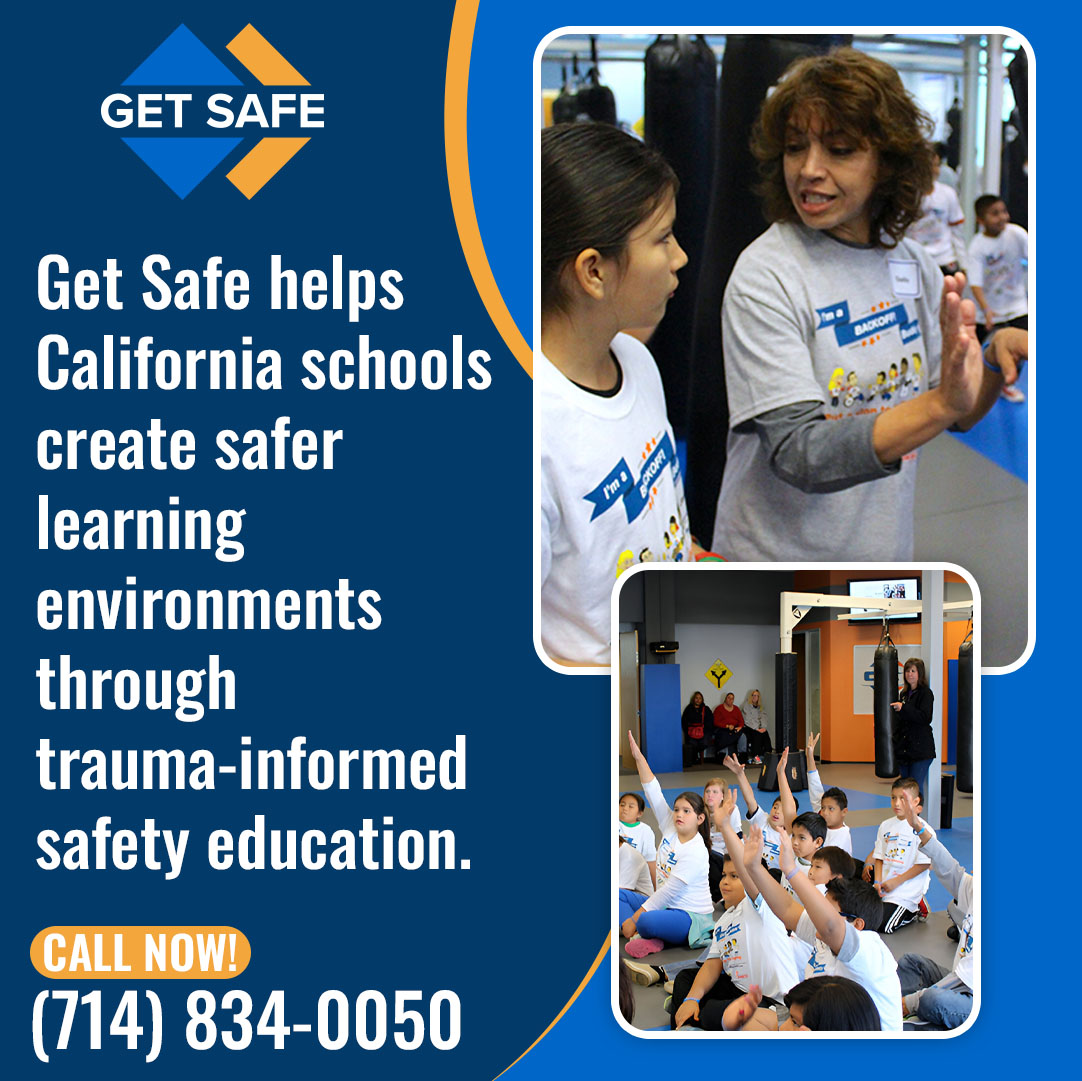
Why Violence Prevention Matters in Schools and Communities
Creating safer schools and communities protects children, staff, and residents while fostering trust and learning. Prevention starts with awareness and practical strategies that reduce risks before incidents occur.
The Impact of Unsafe Environments
Unsafe environments affect learning and community life. Students exposed to bullying, harassment, or violence often struggle to focus on their studies. Teachers and staff face increased stress, interruptions, and lower job satisfaction. In communities, repeated incidents can erode confidence in local programs and public spaces.
Beyond academic performance, children can experience anxiety, fear, and withdrawal. Vulnerable populations, including those with intellectual or developmental disabilities (IDD), may face higher risks of exploitation or harm without safety guidance.
At Get Safe, we have seen that structured training, consistent communication, and proactive strategies create calmer, more supportive environments for everyone involved.
Common Safety Challenges in Schools and Communities
Safety challenges appear in many forms. Some of the most frequent issues include:
Bullying, cyberbullying, and peer aggression
Physical altercations or fights
Harassment or discrimination
Unauthorized visitors or breaches in security
Active shooter or emergency situations
Each scenario demands tailored approaches. For example, cyberbullying requires digital awareness programs for students and staff, while physical confrontations may be reduced through conflict-resolution training. Recognizing these challenges helps us prioritize prevention and practical solutions.
To give you a clear picture, here are common safety risks in schools and how Get Safe training helps address each one.
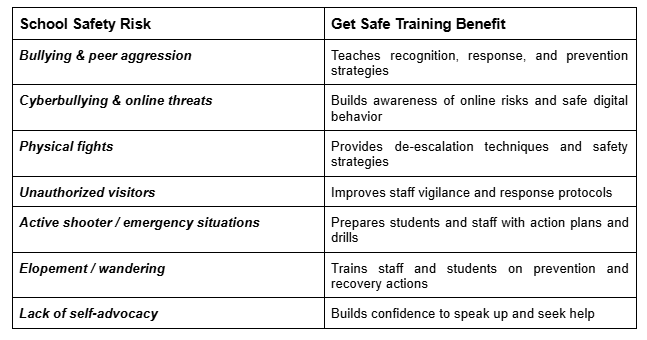
These examples highlight how targeted, practical safety training can help students, educators, and school communities respond confidently to potential threats and reduce the risk of incidents.
Recognizing the Role of Awareness
Awareness prevents escalation. We train staff, parents, and students to recognize early warning signs, like changes in behavior, social withdrawal, or unusual online activity.
Educating adults and youth in Los Angeles, Long Beach, and Anaheim gives them clear steps to act calmly and confidently before a situation becomes dangerous.
By combining observation, communication, and structured response plans, we help schools and communities respond quickly. Awareness transforms reactive measures into proactive protection, creating an environment where everyone can feel safe while learning or working.
Risks of Not Providing Safety Training to Children
Children without structured safety guidance face risks that extend beyond the classroom. We see how gaps in preparation leave children vulnerable to harm, lower confidence, and affect the broader school and community environment.
Increased Vulnerability to Bullying and Peer Aggression
Children without guidance may face repeated targeting. They often lack strategies to respond safely to teasing, exclusion, or intimidation. This can make bullying persistent and isolating.
We focus on giving children practical skills through:
Role-playing exercises to practice standing up safely
Clear communication techniques to report concerns
Strategies for respecting peers while asserting boundaries
Higher Risk of Physical and Emotional Harm
Children may not recognize unsafe situations. Conflicts, accidents, or encounters with strangers can escalate without preparation. Emotional consequences like fear, withdrawal, or stress often accompany physical risk.
Key practices we implement include:
Identifying potential hazards in school and community spaces
Teaching calm responses to conflicts or unexpected events
Building routines that support safe decision-making
Limited Self-Advocacy Skills
Children may struggle to communicate concerns. Without guidance, they may delay reporting issues, leaving unsafe conditions unresolved.
We introduce skills such as:
Expressing discomfort clearly to adults or peers
Asking for help confidently
Reporting incidents without fear
Challenges in Emergency Situations
Children can panic during fires, severe weather, or intruder events. Untrained reactions increase danger for themselves and others.
Our approach includes:
Step-by-step drills for common emergency scenarios
Repetition to build familiarity and calm responses
Teaching children to support peers while staying safe
Long-Term Mental Health and Confidence Effects
Repeated exposure to unsafe conditions can impact mental health. Anxiety, low self-esteem, and fear-based behaviors may limit social and academic growth.
We help children develop:
Self-confidence through practice and feedback
Communication skills to navigate daily challenges
Resilience to face complex social situations
Broader School and Community Consequences
Lack of safety training affects the entire school environment. Conflicts rise, trust decreases, and schools become reactive rather than supportive.
Our programs in Los Angeles, Long Beach, and Anaheim encourage:
Collaboration between students, staff, and families
Consistent routines for safety and conflict resolution
A culture of proactive awareness and responsibility
Personal Safety Classes in California
We provide personal safety classes in California to help children, adults, and individuals with IDD build confidence and practical skills for daily life. Our approach combines hands-on training, real scenarios, and interactive learning to make safety concepts tangible for every participant.
Who Benefits from Personal Safety Classes
Our classes reach a wide range of participants. Safety skills are valuable for anyone, from students to adults, and especially for individuals who may face additional challenges in daily interactions.
Participants include:
Students of all ages: From elementary school through high school, students learn how to recognize risk, set boundaries, and respond safely in peer interactions.
Adults in schools, workplaces, and community settings: Teachers, staff, and employees gain skills to manage conflicts, respond to emergencies, and maintain safe environments.
Individuals with IDD (intellectual and developmental disabilities): Our classes break down complex safety concepts into understandable, memorable steps tailored to each learner.
We tailor our programs to the unique needs of each group—adults with IDD, law enforcement, educators, healthcare professionals, and corporate teams—while keeping the training trauma-informed, inclusive, and compliant with California regulations.
Types of Personal Safety Training
Safety education covers multiple areas. We structure our training around real-life scenarios that participants are likely to encounter.
Key components include:
Situational awareness and boundary setting: Learning to notice potential risks and set personal limits confidently.
Self-advocacy and communication skills: Teaching clear ways to express concerns and ask for help when needed.
Community navigation and emergency response: Preparing for public spaces, transportation, and urgent situations like medical emergencies or intruder alerts.
By combining hands-on activities with discussion and feedback, we create personal safety classes that build confidence, practical skills, and readiness for real situations across California.
Violence Prevention Training in Action
We deliver violence prevention training that addresses real challenges in schools, communities, and professional settings. Our goal is to give educators, law enforcement, caregivers, and service providers practical tools to reduce risks and respond confidently to incidents.
School and Educator Training
Our school programs focus on creating safer environments for students and staff.We train educators to spot early warning signs and respond in ways that support both students and school culture.
Key areas include:
Bullying prevention strategies: Practical techniques to identify, stop, and reduce peer aggression in classrooms and playgrounds.
Conflict resolution techniques: Methods to handle disagreements without escalation and guide students toward positive outcomes.
Trauma-informed approaches for students who experienced violence: Supporting children with patience, empathy, and structured interventions that build resilience.
Training for Service Providers and Caregivers
Support staff and caregivers gain tools to protect and guide those in their care. Our programs emphasize prevention, response, and teaching safety skills to clients.
Highlights include:
Reducing risks of exploitation or assault: Identifying risky situations and taking proactive steps to protect participants.
Teaching self-advocacy and healthy decision-making: Helping individuals communicate needs, set boundaries, and make safer choices.
Preparing for emergencies and elopement incidents: Planning and practicing responses for wandering, natural disasters, or crises.
By tailoring programs to the needs of each audience, we make safety training practical, actionable, and applicable in everyday environments. Participants leave with skills they can use immediately to protect themselves and those around them.
School Safety Programs for Students
We design school safety programs to give students practical skills for staying safe, building confidence, and contributing to a supportive school community. These programs help students, teachers, and administrators address challenges before they escalate.
Bullying Prevention Programs for Schools
Our bullying prevention programs for schools focus on identifying and addressing harmful behavior early. We teach students and staff to respond thoughtfully and support peers in challenging situations.
Key elements include:
Identifying and addressing bullying behavior: Recognizing verbal, social, and online harassment and taking appropriate steps to intervene.
Peer-to-peer support strategies: Encouraging students to support classmates, foster inclusion, and reduce isolation.
Promoting empathy, leadership, and confidence: Activities that build self-respect and respect for others while reinforcing personal responsibility.
Personal Advocacy & Leadership Skills (PALS)
PALS programs develop communication, decision-making, and problem-solving skills. We guide students in using their voice constructively while contributing to a safe and inclusive environment.
Key components include:
Communication skills: Expressing ideas clearly and respectfully in group and one-on-one settings.
Problem-solving and decision-making: Tools for analyzing situations, considering consequences, and taking positive action.
Supporting a safe school culture: Encouraging student leadership in promoting fairness, respect, and inclusion.
Active Shooter Prevention and Response
Our training helps students and staff prepare for emergencies without fear. We focus on awareness, planning, and calm responses to protect everyone on campus.
Focus areas include:
Recognizing early warning signs: Identifying concerning behaviors or environmental cues that may signal danger.
Emergency action plans and lockdown protocols: Practical steps for responding during lockdowns, evacuations, or other critical events.
Situational awareness and safety readiness: Teaching students to stay alert, follow instructions, and support peers during emergencies.
Through these programs, students gain confidence, learn practical safety skills, and contribute to a school culture that values respect, communication, and proactive problem-solving.
Trauma-Informed Safety Education
We design trauma-informed safety education to help students, adults, and professionals respond thoughtfully to challenging situations. Our approach builds skills, confidence, and collaboration while respecting each individual’s experiences.
What Trauma-Informed Education Means
Trauma-informed education recognizes that past experiences of violence, abuse, or other trauma can shape how individuals react, communicate, and learn. By acknowledging this, we create learning environments where everyone feels heard, respected, and safe to engage.
Key principles include:
Respectful interactions: Treating each individual with dignity and recognizing their experiences.
Awareness of past trauma: Understanding that prior exposure to unsafe situations can affect behavior and responses.
Safe learning spaces: Encouraging open dialogue and active listening without judgment.
Benefits of Trauma-Informed Safety Education
Applying trauma-informed practices in training produces meaningful outcomes for schools, communities, and workplaces. Participants develop practical safety skills while trust and collaboration grow among peers, staff, and caregivers.
Key outcomes include:
Reduced incidents: Fewer occurrences of bullying, assault, and unsafe interactions.
Increased confidence and self-advocacy: Participants can set boundaries and speak up safely.
Strengthened collaboration: Staff, caregivers, and peers work together with shared strategies for safety.
By integrating trauma-informed practices into every session, we create learning experiences that support growth, resilience, and safer environments for everyone.
Why Get Safe Stands Out in Los Angeles–Long Beach–Anaheim
We bring decades of hands-on experience to every training session. Our approach is built on real-world knowledge,OSHA-aligned and tailored programs, and measurable results that benefit schools, communities, and workplaces across Southern California.
Real-World Experience Behind the Curriculum
Our instructors come from law enforcement, mental health, and crisis response backgrounds. They use practical examples and scenarios drawn from actual situations to help participants recognize risks and respond effectively.
Role-playing exercises for realistic problem-solving
Case-based discussions reflecting local community challenges
Guidance on communicating with vulnerable populations
We customize each program to meet the needs of different participants. Whether working with students, parents, school staff, adults with IDD, or corporate teams, sessions are inclusive, accessible, and compliant with California regulations.
Measurable Impact on Communities
Our training produces tangible results for schools and communities. Participants build practical safety skills, reduce incidents, and strengthen collaboration among all stakeholders.
Safer school environments through proactive prevention
Increased confidence in identifying and addressing risks
Stronger communication between staff, students, families, and service providers
We work with schools, community organizations, and agencies to create learning experiences that are immediately useful, practical, and relevant. Our sessions help participants take actionable steps toward safer environments.
Client Testimonial:“My son was so shy. After going to a Get Safe class, his self confidence is much better now and he lost weight. The Get Safe staff is also very friendly.” –A. Ma
This story reflects the real-life impact of our programs and demonstrates how safety training can help individuals regain confidence, personal control, and resilience.
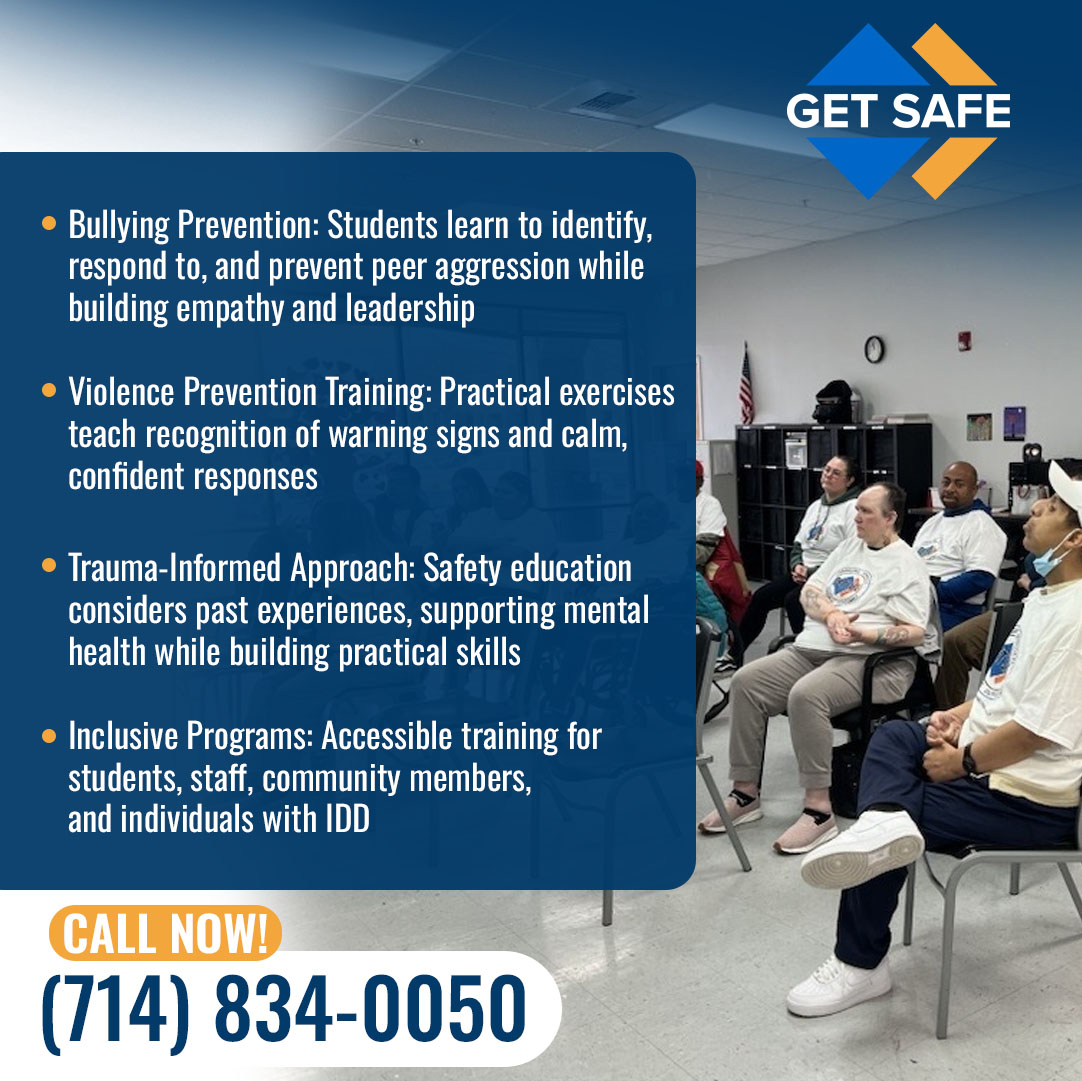
Take Action to Build Safer Communities Today
At Get Safe, we provide tailored safety training for schools, communities, and organizations across Los Angeles, Long Beach, and Anaheim. Connect with us to schedule a session or request more information on violence prevention training, school safety programs by emailing [email protected] or calling (714) 834-0050.
Our team is ready to guide you through programs that help students, staff, and vulnerable populations build confidence, reduce risk, and respond effectively in challenging situations.