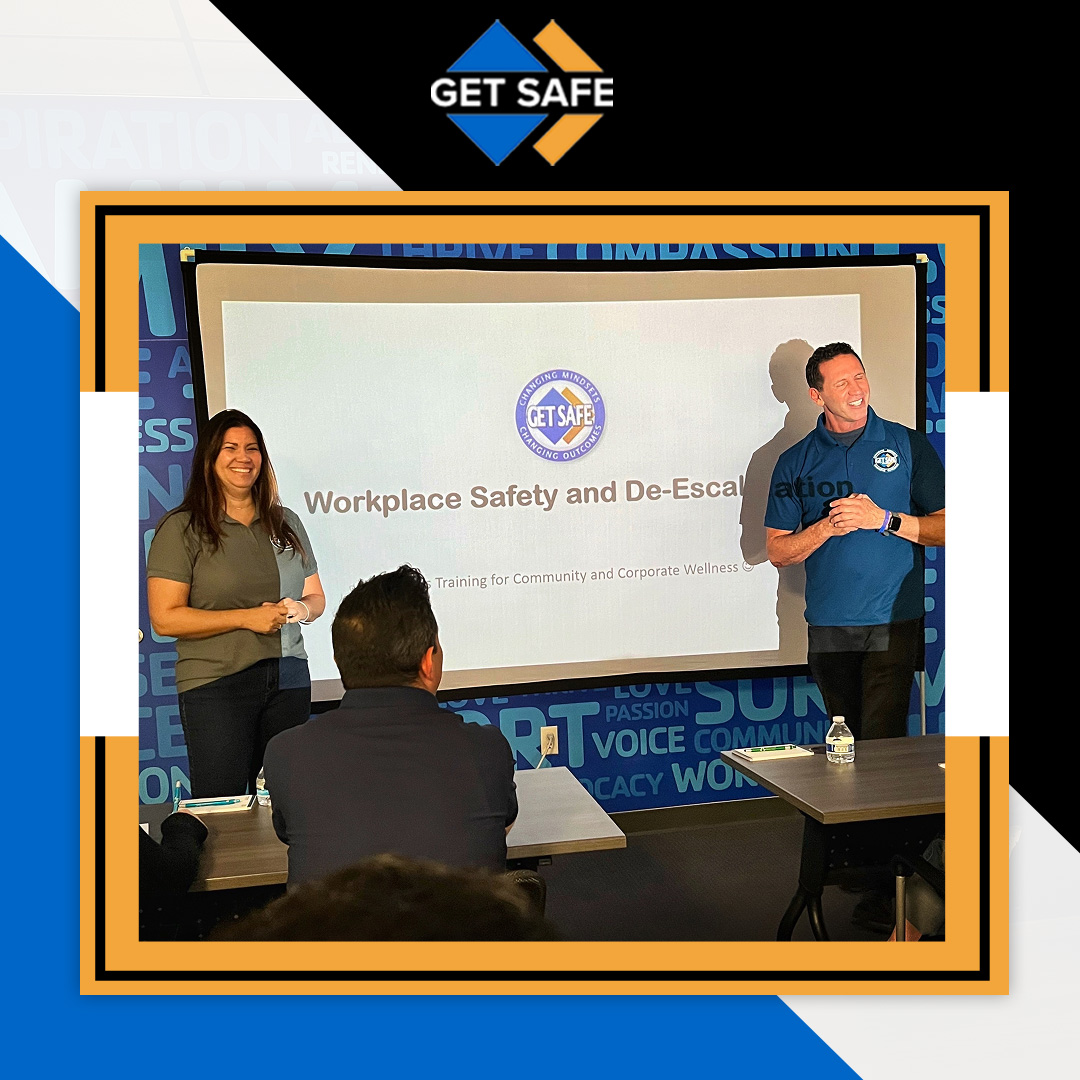
Does De-Escalation Training Actually Reduce Workplace Violence? What the Research Shows
Violence prevention and de-escalation training reduces everyday workplace violence risks by teaching employees to recognize early warning signs, use specific verbal techniques to calm tense moments, and know when to disengage or call for help. Paired with active shooter prevention training and self-defense for women, it builds a layered response instead of relying on one skill alone.
At Get Safe, business leaders in Los Angeles, Long Beach, and Anaheim often ask us the same question after a close call at work: What actually changes once employees go through training? Here's how it works.

How Does Violence Prevention Training Help With Everyday Workplace Challenges?
Employees encounter stressful situations every day, from customer disputes and frustrated visitors to disagreements between coworkers.
Our training helps employees recognize early warning signs, communicate calmly, and apply practical techniques that reduce tension before routine workplace interactions develop into more serious safety concerns.
What Happens During Violence Prevention Training?
Violence prevention and de-escalation training walks employees through the buildup to a conflict, not just the conflict itself.
Sessions typically cover recognizing behavioral red flags, using body language and tone to lower tension, and following a clear reporting chain.
Our workplace safety training builds these steps around scenarios specific to each client's industry, since a hospital front desk and a warehouse floor face different risks.
How Effective Is De-Escalation Training at Reducing Incidents?
De-escalation training has a measurable effect on injury outcomes, even when incident counts vary by workplace.
A systematic review from the International Association of Chiefs of Police and the University of Cincinnati found that 76.9 percent of studies measuring workplace injuries reported reductions after de-escalation training; however, results can vary by industry and specific workplace conditions.
How Do Corporate Safety Training and Active Shooter Prevention Training Differ?
We combine all these inside a single corporate safety training plan, so no one skill set is left to chance.
Our team delivers customized corporate safety training in Los Angeles by combining these programs to address the unique and everyday risks of each workplace.
What De-Escalation Techniques Actually Work at the Moment?
Once a conflict starts, technique matters more than instinct. Employees trained in de-escalation learn to:
Keep a low, steady tone instead of matching an aggressor's volume
Give the other person space and avoid sudden movements
Ask open questions that invite talking instead of confrontation
Set a clear, calm boundary without issuing threats or ultimatums
Why Does Self-Defense Training for Women Belong in This Plan?
Verbal de-escalation works in most situations, but not every threat gives an employee that option.
Self-defense for women adds a physical layer for the moments when talking isn't enough, particularly for staff who work alone, travel between sites, or leave the building after dark.
Why Does Ongoing Training Matter More Than a One-Time Session?
Skills fade without practice, especially under stress. A single training day builds awareness, but repeated drills build the muscle memory employees actually use during a real event.
What Happens When Training Is Skipped or Only Half Completed?
Untrained teams don't just miss a skill. They lose the seconds that matter most in a real incident.
Employees who never learn to recognize warning signs often freeze or escalate a situation without meaning to, leaving staff back where they started.
The business feels this too, not just the employee involved. A single incident can mean higher workers' compensation premiums, lost productivity while staff cover an absence, and turnover from employees who no longer feel safe coming to work.
FAQ
How long does it take to roll out violence prevention training at a company?
Most programs can be scheduled and delivered within a few weeks of the initial request, depending on group size and site availability.
Do employees need to renew their de-escalation training?
Yes. We recommend an annual refresher at a minimum, with additional sessions after a policy change or reported incident.
Is this training practical for remote or hybrid teams?
Yes. Communication and reporting protocols apply regardless of location, and in-person sessions can be scheduled for hybrid teams' on-site days. Please note that physical self-defense training requires in-person participation.

Build a Safer Workplace Today
Prepare your team in Los Angeles, Long Beach, and Anaheim with practical workplace safety, violence prevention, and de-escalation training from Get Safe. Contact Get Safe through our website to create a safety plan tailored to your organization.
Take proactive steps today to protect your people, reduce risks, and strengthen workplace readiness.